
Gallstones: Symptoms, Causes and Expert Treatment in Hyderabad
By Admin | 2026-03-16
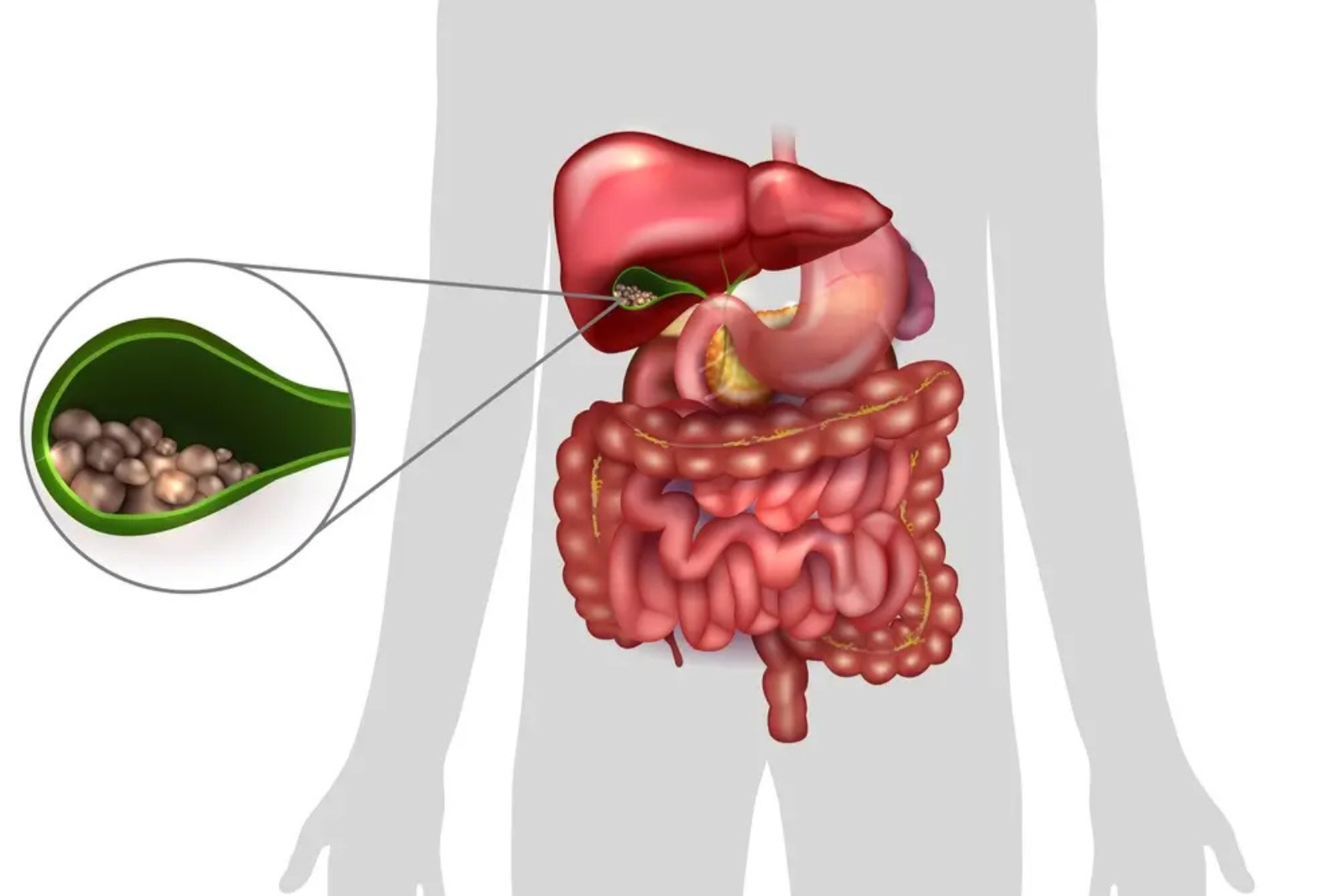
A sudden, severe pain in the upper right abdomen often triggered by a rich, oily meal is one of the most recognizable presentations of gallstone disease. Yet gallstones are not always this dramatic.
Many people carry gallstones for years without any symptoms, while others experience recurrent attacks of crippling biliary colic that disrupt daily life and can escalate into life-threatening complications if not treated. Gallstones are the most common cause of acute pancreatitis and are a frequent trigger for biliary infections that can become emergencies.
At KIMS Advanced Gastroenterology & Endoscopy KAGE, at KIMS Hospitals Secunderabad, Hyderabad, our expert gastroenterologists led by Dr. Sreekanth Appasani, one of Hyderabad's most experienced ERCP specialists provide accurate diagnosis and the most advanced endoscopic and minimally invasive treatments for gallstone disease. Serving patients from Secunderabad, Begumpet, Ameerpet, Himayatnagar, and across Hyderabad.
What Are Gallstones?
Gallstones are hardened deposits that form in the gallbladder — a small pouch beneath the liver that stores bile, a digestive fluid produced by the liver to break down fats. Gallstones form when bile contains too much cholesterol, too much bilirubin, or insufficient bile salts to keep these substances dissolved in solution. There are two main types:
- Cholesterol gallstones: The most common type formed from excess cholesterol in bile. Associated with obesity, high-fat diet, rapid weight loss, and female sex hormone effects.
- Pigment gallstones: Formed from excess bilirubin more common in patients with hemolytic anaemia (including sickle cell disease and thalassemia), liver cirrhosis, and biliary infections.
Who Gets Gallstones? Risk Factors
- Female sex estrogen increases bile cholesterol saturation; risk increases with oral contraceptive use and pregnancy
- Obesity the most modifiable risk factor; obese individuals have significantly increased bile cholesterol
- Rapid weight loss or bariatric surgery paradoxically increases gallstone formation
- Diabetes and metabolic syndrome
- Family history of gallstones
- High-fat, low-fibre diet common in urban Hyderabad's food culture
- Pregnancy progesterone slows gallbladder emptying, promoting stone formation
- Haemolytic conditions sickle cell disease, thalassemia
- Age over 40 gallstone prevalence increases with age
Gallstone Symptoms
Asymptomatic Gallstones
Approximately 80% of gallstones cause no symptoms and are discovered incidentally on ultrasound. These are generally monitored rather than treated, unless specific risk factors for complications are present.
Symptomatic Gallstones Biliary Colic
- Severe, cramping pain in the upper right abdomen typically starting 30–60 minutes after a fatty meal
- Pain radiating to the right shoulder or back
- Nausea and vomiting
- Pain lasting 30 minutes to several hours, then resolving
Complications of Gallstones
Fever with jaundice and severe abdominal pain Charcot's triad is a biliary emergency. Go to KIMS Hospitals, Secunderabad immediately for urgent ERCP.
- Acute Cholecystitis: Inflammation of the gallbladder from an obstructing stone causes persistent, severe right upper abdominal pain, fever, and leucocytosis. Requires urgent treatment.
- Choledocholithiasis: Stones passing into the common bile duct causing obstructive jaundice (yellow skin and eyes), dark urine, pale stools, and risk of cholangitis.
- Cholangitis: Life-threatening infection of the bile ducts (Charcot's triad fever, jaundice, right upper abdominal pain) a medical emergency requiring urgent ERCP.
- Gallstone Pancreatitis: A stone obstructing the pancreatic duct — triggering acute pancreatitis.
Diagnosing Gallstones at KAGE, Hyderabad
- Ultrasound Abdomen: The first-line and most effective test for gallbladder stones highly sensitive and non-invasive. Detects gallbladder wall thickening in cholecystitis.
- Liver Function Tests and CBC: Elevated bilirubin and ALP indicate bile duct obstruction; leucocytosis indicates infection.
- MRCP (Magnetic Resonance Cholangiopancreatography): Non-invasive imaging of the bile ducts the best test for detecting common bile duct stones before ERCP.
- EUS (Endoscopic Ultrasound): At KAGE, EUS provides the most detailed imaging of the bile ducts, detecting small stones (microlithiasis) missed by standard ultrasound.
- ERCP: Both diagnostic and therapeutic used when bile duct stones are confirmed or highly suspected.
Gallstone Treatment at KAGE, KIMS Hospitals Secunderabad
ERCP (Endoscopic Retrograde Cholangiopancreatography) is the gold-standard endoscopic procedure for removing stones from the bile duct without surgery. At KAGE, ERCP is performed by Dr. Sreekanth Appasani, one of Hyderabad's most experienced ERCP operators, using state-of-the-art fluoroscopy and Olympus duodenoscopes. The procedure involves: passing an endoscope to the duodenum; cannulating the bile duct opening; sphincterotomy (cutting the bile duct sphincter to widen the opening); and stone extraction using baskets and balloons. ERCP has success rates >95% in experienced hands at KAGE.
SpyGlass Cholangioscopy for Difficult Bile Duct Stones
For large or complex bile duct stones that cannot be removed with standard ERCP, KAGE offers SpyGlass cholangioscopy a 'camera within a camera' that allows direct visualization of the bile duct interior and laser or electrohydraulic lithotripsy to break up difficult stones. This is one of the most advanced biliary tools available in Hyderabad.
For large bile duct stones: electrohydraulic lithotripsy (EHL) and laser lithotripsy are used at KAGE to fragment stones inside the bile duct before extraction avoiding surgery in almost all cases.
Cholecystectomy Coordination
After ERCP for bile duct stones, the gallbladder (the source of the stones) is typically removed surgically (laparoscopic cholecystectomy). KAGE coordinates closely with KIMS Hospitals' surgical team for seamless patient management.
Conclusion
Gallstone pain or jaundice? Get expert ERCP and biliary care at KAGE, KIMS Hospitals Secunderabad. Call: +91-7288842255
Frequently Asked Questions
Ursodeoxycholic acid (UDCA) can dissolve small cholesterol gallstones in some patients but it works only for specific stone types, takes months to years, and stones often recur when treatment stops. It is generally used in patients unfit for surgery or ERCP. For most patients with symptomatic gallstones, endoscopic (ERCP) or surgical treatment provides more reliable, permanent relief.
ERCP is used specifically to remove stones from the common bile duct it does not remove the gallbladder. It is an endoscopic procedure without any incision, performed under sedation as a day procedure. Cholecystectomy (gallbladder removal) is a surgical procedure that removes the gallbladder the source of the stones preventing future stones from forming. Most patients with bile duct stones need both: ERCP first to clear the bile duct, followed by cholecystectomy.
ERCP is a highly effective procedure with excellent safety in experienced hands. Potential complications include pancreatitis (1–5%), bleeding, and rarely perforation. At KAGE, ERCP is performed by Dr. Sreekanth Appasani with 20+ years of experience minimizing procedural risk and ensuring the best outcomes. You will be monitored closely before and after the procedure.
Most asymptomatic gallstones do not require immediate treatment. Watchful waiting with periodic ultrasound monitoring is appropriate for most patients. However, treatment is recommended for asymptomatic gallstones if the stones are very large (>3 cm), if the gallbladder wall is thickened, if you have a 'porcelain gallbladder' (calcified gallbladder wall associated with cancer risk), or if you are undergoing bariatric surgery. Your KAGE gastroenterologist will advise whether your asymptomatic stones need intervention.
KAGE at KIMS Hospitals, Secunderabad, is equipped with the Olympus X1 duodenoscope, SpyGlass cholangioscopy system, EHL and laser lithotripsy capabilities, and Dornier ESWL making it one of the most comprehensively equipped biliary centers in Hyderabad. Dr. Sreekanth Appasani has 20+ years of ERCP experience and has published research in international gastroenterology journals on biliary disorders. Address: C/O Gastroenterology Dept, KIMS Hospitals, 1-8-31/1, Minister Road, Secunderabad, Hyderabad – 500003. Open Monday–Saturday 9:00 AM to 5:30 PM. Call +91-7288842255.