
Upper GI Endoscopy: Complete Guide for Patients
By Admin | 2026-03-16
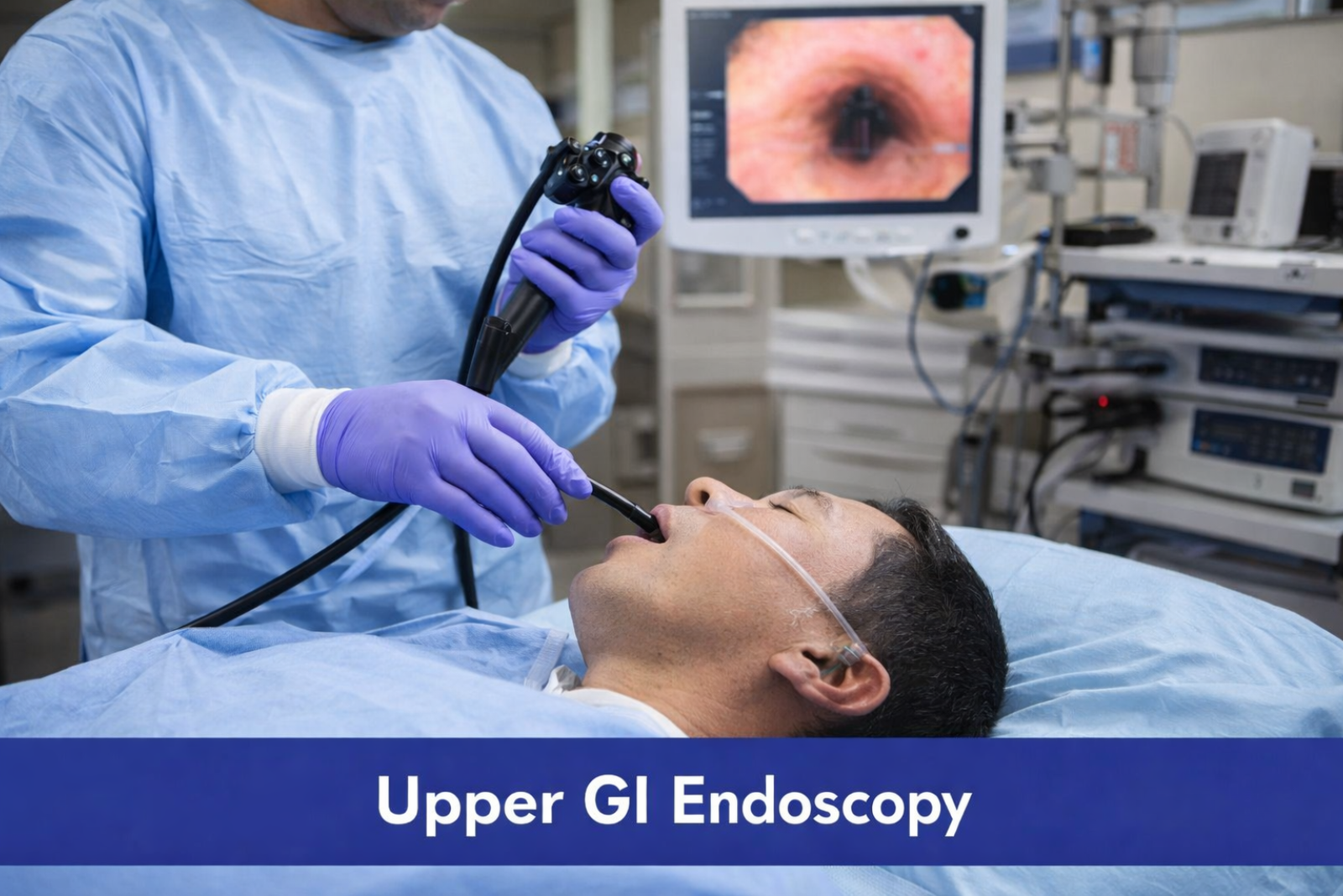
The words you need an endoscopy can feel alarming to patients who have never had the procedure. What will they see? Will it be painful? What will they find? These are questions that every person facing an endoscopy deserves clear, honest answers to before they lie down on the procedure table.
An upper gastrointestinal (GI) endoscopy also called OGD scopy (Oesophago-Gastro-Duodenoscopy) or gastroscopy is one of the most important and commonly performed diagnostic and therapeutic procedures in gastroenterology.
At KIMS Advanced Gastroenterology & Endoscopy KAGE, at KIMS Hospitals Secunderabad, Hyderabad, we perform hundreds of endoscopies every month using state-of-the-art Olympus X1 HD and Fuji ELUXEO 7000 equipment with an exceptional team of interventional endoscopists led by Dr. Sreekanth Appasani, one of Hyderabad's most accomplished and experienced endoscopy specialists. This complete guide will walk you through everything you need to know about upper GI endoscopy before, during, and after.
What Is an Upper GI Endoscopy?
An upper GI endoscopy (OGD scopy) is a procedure in which a thin, flexible tube called an endoscope equipped with a high-definition camera and light source is gently passed through the mouth, down the esophagus (food pipe), into the stomach, and through the first part of the small intestine (duodenum). The camera transmits real-time, magnified images to a high-definition monitor, allowing the endoscopist to directly visualize the entire upper gastrointestinal tract in exceptional detail.At KAGE, all upper GI endoscopies are performed using the Olympus X1 HD Endoscope with 4K-equivalent imaging quality, Fuji ELUXEO 7000 with Blue Light Imaging (BLI) for enhanced mucosal detail, and the Ultra-Slim Nasal Endoscope for patients preferring a transnasal approach without sedation.
When Is an Upper GI Endoscopy Recommended?
Diagnostic Indications
- Persistent or severe heartburn and GERD not responding to medication
- Difficulty swallowing (dysphagia) or painful swallowing (odynophagia)
- Persistent nausea or vomiting
- Upper abdominal pain or discomfort not explained by simpler tests
- Unexplained weight loss with GI symptoms
- Vomiting blood (hematemesis) or blood in stools
- Surveillance for Barrett's esophagus, gastric ulcers, or post-surgery anatomy
- Evaluation of suspected celiac disease, H. pylori infection, or gastritis
- Anaemia with suspected upper GI blood loss
Therapeutic Indications — What Can Be Done During Endoscopy at KAGE
- Biopsy tissue samples taken from suspicious areas
- Hemostasis stopping bleeding from ulcers or varices using injection, thermal, or mechanical methods
- Variceal band ligation treatment of esophageal varices in cirrhosis patients
- Polypectomy removal of gastric polyps
- Esophageal dilatation stretching of esophageal strictures caused by acid, corrosive injury, or cancer
- POEM (Peroral Endoscopic Myotomy) for achalasia cardia
- EMR and ESD removal of early-stage upper GI tumors
- Stent placement for esophageal or gastric outlet obstruction
- PEG (Percutaneous Endoscopic Gastrostomy) feeding tube placement
How to Prepare for an Endoscopy at KAGEHow to Prepare for an Endoscopy at KAGE
Before the Procedure
- Fasting: Nothing to eat for at least 6–8 hours before the procedure. Clear fluids allowed up to 4 hours before.
- Medications: Most regular medications can be taken with a small sip of water. Blood thinners (warfarin, clopidogrel, aspirin) may need to be paused your KAGE doctor will advise specifically.
- Inform your endoscopist: About any allergies, heart conditions, lung problems, or if you are pregnant.
- Arrange transport: If you are having sedation, you will not be able to drive arrange for someone to take you home.
- Wear comfortable, loose-fitting clothing.
On the Day of the Procedure
- Arrive 30 minutes before your scheduled time for registration and pre-procedure checks
- IV access (cannula) will be placed for sedation administration
- A throat spray (local anaesthetic) will be applied to the back of your throat to reduce the gag reflex
- A small mouthguard will be placed between your teeth to protect both you and the endoscope
- You will lie on your left side on the procedure table
What Happens During the Endoscopy at KAGE
- Sedation is administered you will be in a relaxed, drowsy state and unlikely to feel significant discomfort
- The endoscope is gently passed through your mouth and throat you will be asked to swallow to help it pass
- The stomach is gently inflated with air for better visibility
- The endoscopist carefully examines the esophagus, stomach, and duodenum looking at the mucosal surface in high definition
- Any required interventions biopsies, polypectomy, dilatation, banding are performed at this stage
- The entire procedure typically takes 10–30 minutes for a diagnostic scope; longer for therapeutic procedures
- You will be monitored by a trained nursing team throughout
After the Endoscopy: Recovery and What to Expect
- Recovery time: 30–60 minutes in the recovery area at KAGE
- Throat soreness: Mild soreness for 24–48 hours normal and temporary
- Bloating: Mild bloating from the air passes within a few hours
- Eating and drinking: Can resume soft food and liquids 1–2 hours after the procedure once the throat numbness wears off
- Results: Your endoscopist will explain the findings immediately after the procedure. Biopsy results take 3–7 days.
- Activity: Rest for the remainder of the day if sedation was used. Normal activities can resume the next day.
- Driving: Do not drive for 24 hours after receiving sedation
Advanced Endoscopy Capabilities at KAGE That Go Beyond Routine
What sets KAGE apart from routine endoscopy centers is the depth of advanced therapeutic capability available:
- POEM: Peroral Endoscopic Myotomy for achalasia a complex procedure requiring high endoscopic expertise; performed by Dr. Sreekanth Appasani at KAGE.
- ESD (Endoscopic Submucosal Dissection): For en-bloc resection of early GI cancers avoiding surgery.
- EMR (Endoscopic Mucosal Resection): For large polyps and superficial tumors.
- ARMA and GERDx: Endoscopic anti-reflux procedures for GERD.
- EUS (Endoscopic Ultrasound): Ultrasound integrated into the endoscope tip for submucosal lesion evaluation, lymph node staging, pancreatic and biliary diagnosis.
- Corrosive Injury Clinic: Specialised endoscopic management of chemical ingestion injuries esophageal dilatation and stenting at KAGE's Corrosive Injury Clinic.
Conclusion
Need an endoscopy or OGD scopy in Hyderabad? Book at KAGE — Hyderabad's most advanced endoscopy center at KIMS Hospitals, Secunderabad. Call: +91-7288842255
Frequently Asked Questions
Most patients at KAGE experience minimal to no discomfort during upper GI endoscopy performed under conscious sedation. The throat spray reduces the gag reflex and sedation keeps you relaxed and drowsy. Some patients feel mild discomfort when the endoscope passes the back of the throat, but this is brief. Post-procedure mild throat soreness and bloating are common and temporary.
A standard diagnostic OGD scopy takes approximately 10–15 minutes. Therapeutic procedures such as variceal banding, dilatation, or polypectomy take 20–45 minutes. Complex advanced procedures (POEM, ESD) take 60–120 minutes. Including preparation and recovery, plan for 2–3 hours at KIMS Hospitals, Secunderabad, for a standard endoscopy.
Yes, endoscopy is the primary tool for detecting gastric (stomach) cancer. High-definition endoscopy using NBI and BLI imaging at KAGE can detect subtle mucosal changes consistent with early gastric cancer that would be invisible on CT scan or standard imaging. Early gastric cancer detected on endoscopy can often be treated endoscopically (ESD/EMR) without surgery with excellent cure rates.
The Ultra-Slim Nasal Endoscope at KAGE allows upper GI endoscopy to be performed through the nose rather than the mouth providing a more comfortable experience without the need for sedation in many patients. It is particularly useful for elderly patients, patients with severe gag reflex, or those who prefer to remain fully conscious during the examination while watching the procedure on a monitor.
Before your endoscopy at KAGE, inform your gastroenterologist about: all current medications (especially blood thinners warfarin, aspirin, clopidogrel, newer anticoagulants); any allergies (particularly to sedatives or local anaesthetics); any history of heart disease, lung conditions, or bleeding disorders; whether you are pregnant or breastfeeding; and any previous reactions to sedation. This ensures the safest possible procedure. Book at KIMS Hospitals, Secunderabad: +91-7288842255.