
By Kage Team | 16 September 2026
Introduction
If your doctor has recommended an endoscopy — whether upper GI endoscopy or colonoscopy — the natural instinct is to book wherever is closest and move on. Proximity matters, genuinely, since follow-up and any repeat testing become easier with a nearby hospital. But a few other things are worth checking too, because not every endoscopy suite is equipped the same way.
What should I check before choosing a hospital for endoscopy?
Beyond proximity, check whether the hospital uses high-definition endoscopy equipment (which improves detection of subtle abnormalities), what sedation options are available, whether the department can perform therapeutic procedures — not just diagnostic ones — if something is found during the exam, and what the process looks like for getting and understanding your results afterward.
High-Definition Equipment Genuinely Changes What Can Be Seen
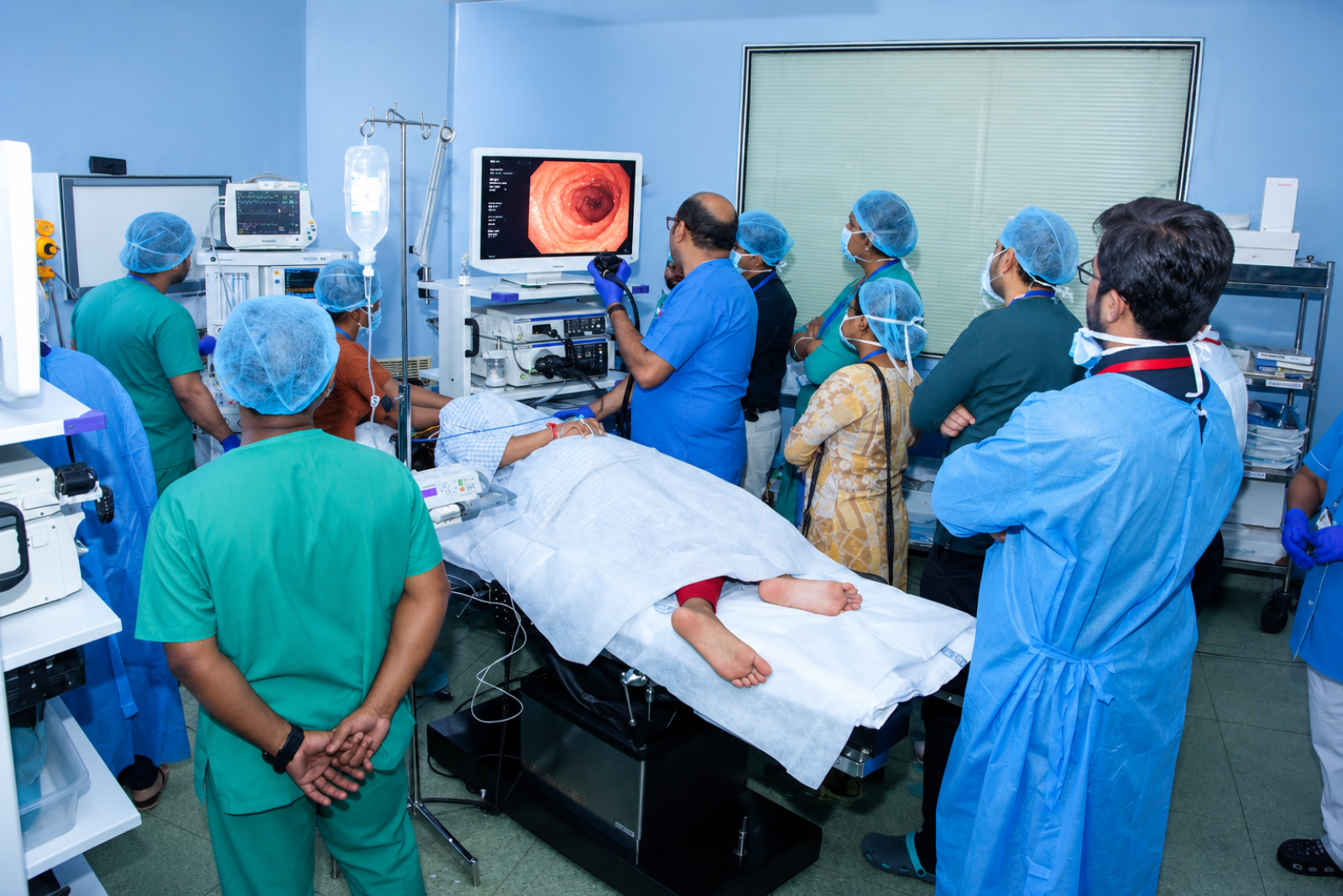
Endoscopy technology has advanced considerably, and the difference between older standard-definition scopes and current high-definition platforms isn't cosmetic — it affects the ability to spot subtle changes in the lining of the stomach, esophagus, or colon that could otherwise be missed. It's a reasonable, specific question to ask: what endoscopy platform does this hospital use? At KAGE, endoscopy is performed on the Olympus EVIS X1 and Fujifilm ELUXEO 7000 platforms, both current-generation high-definition systems designed specifically to improve detection during routine and advanced procedures alike.
Sedation Options Should Be a Real Choice, Not a Default
Endoscopy can be done with no sedation, light/conscious sedation, or deeper sedation with an anaesthetist present — and the right choice depends on your anxiety level, prior experience, and the complexity of the procedure. A hospital that discusses this as a genuine choice, rather than defaulting everyone to the same approach, is generally more attentive to individual patient comfort.
Therapeutic Capability Matters — Not Just Diagnostic Endoscopy
This is the distinction that matters most and is easiest to overlook: a purely diagnostic endoscopy service can look and photograph, but if something needs to be treated during the same procedure — a polyp removed, a bleeding vessel treated, a biopsy taken and sent for urgent analysis — that requires a different level of capability entirely. A department built around Advanced Procedures — ERCP, EUS-guided interventions, endoscopic hemostasis — is generally equipped to treat what it finds in the same session, rather than requiring a second procedure or a referral elsewhere once something unexpected turns up.
Ask About the Turnaround and Explanation of Results
Visual findings during endoscopy are often described to you immediately after the procedure, once sedation wears off enough to have the conversation. If a biopsy is taken, pathology results typically take several days to a week or more. It's worth asking upfront how results are communicated — a follow-up appointment, a phone call, or a portal — so you're not left wondering how you'll find out.
A Short List Before You Book
- What endoscopy platform does the hospital use, and how current is it?
- What sedation options are offered, and is the choice discussed with you directly?
- Can the department treat findings (polyps, bleeding) in the same session, or only diagnose?
- How and when will you receive and understand your results?
- Is the hospital close enough for convenient follow-up if needed?
- Endoscopy at KAGE Hyderabad
Type: Equipment
- Advanced Equipment
Type: Equipment
- Olympus X1 HD Endoscope & Colonoscope
Type: Equipment
- Fuji ELUXEO 7000 & 760Z Endoscope and Colonoscope
Type: Equipment
- Advanced Procedures
Type: Advanced Procedures
- ERCP (Endoscopic Retrograde Cholangiopancreatography)
Type: Advanced Procedure
- EUS Cystogastrostomy
Type: Advanced Procedure
- EUS Biliary Drainage
Type: Advanced Procedure
- EUS GJ (Gastrojejunostomy)
Type: Advanced Procedure
- EUS RF Ablation
Type: Advanced Procedure
- Advanced Endoscopy Clinic
Type: Speciality Clinic
- Our Doctors at KAGE Hyderabad
Type: Doctor Profile
Frequently Asked Questions
Most patients experience discomfort rather than pain, particularly with sedation. A gag reflex during scope insertion is common but brief, and sedation options can reduce this considerably if it’s a concern for you.
In many cases, yes — a department with therapeutic endoscopy capability can remove a polyp during the same procedure it’s discovered in, avoiding the need for a second visit, though this depends on the polyp’s size, location, and characteristics.
Typically, fasting for 6–8 hours beforehand is required so the stomach is empty for clear visualization. Your gastroenterologist will give you specific instructions based on your procedure and any medications you take.
If sedation is used, yes — sedation affects reaction time and judgment for several hours afterward, so driving yourself home is not advisable even if you feel alert.