
By Kage Team | 16 March 2026
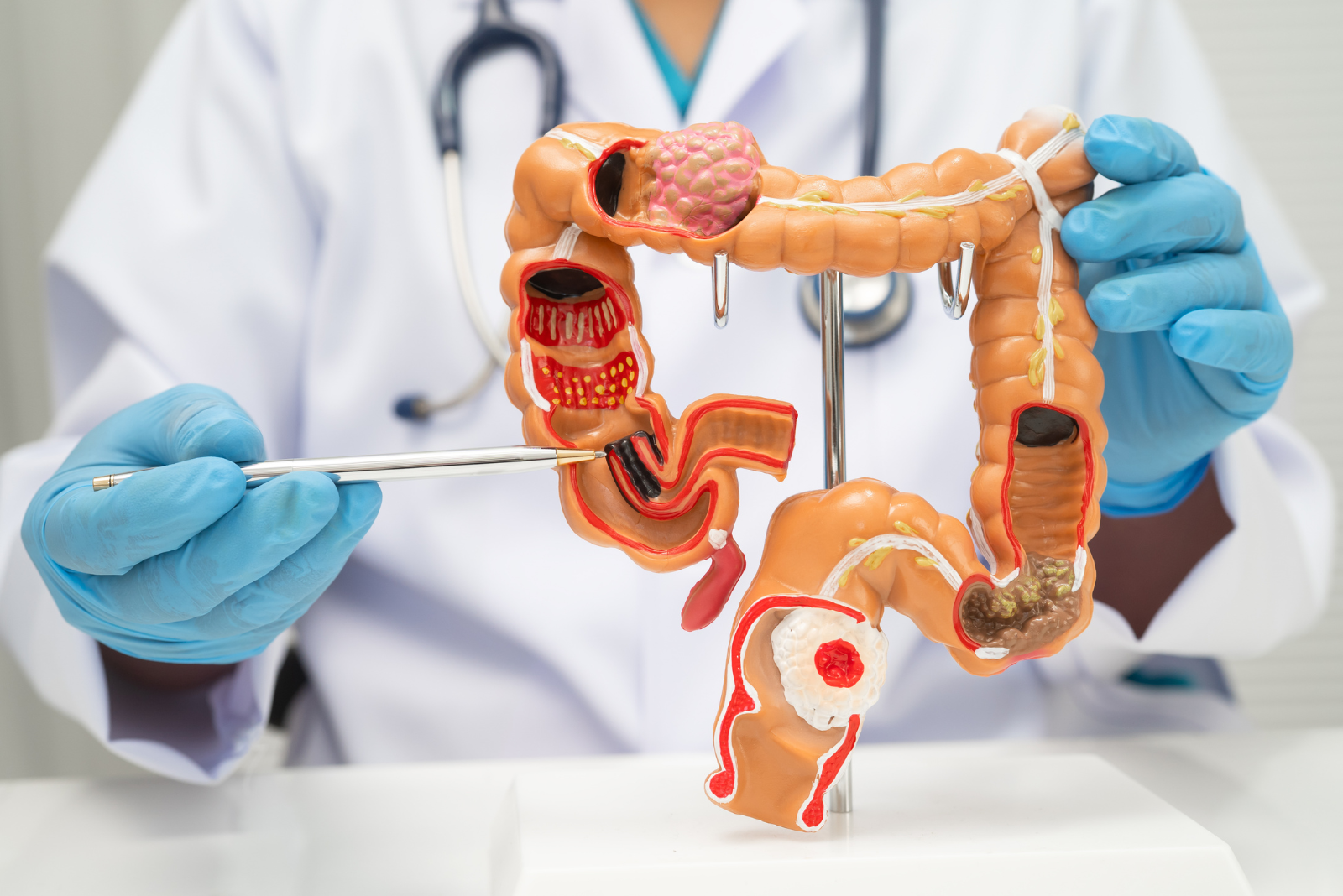
Colorectal cancer is cancer of the colon and rectum is one of the most common cancers in India and worldwide, and one of the most deadly. Yet it is also one of the most preventable and curable cancers when detected early.
Yet it is also one of the most preventable and curable cancers when detected early. The tragedy of colorectal cancer is that it almost always begins as a benign polyp a small growth in the colon lining that can be identified and removed during a routine colonoscopy, years before it ever becomes cancerous. The window of opportunity for prevention is wide but it requires action.
At KIMS Advanced Gastroenterology & Endoscopy KAGE, at KIMS Hospitals Secunderabad, Hyderabad, our expert endoscopy team performs the most thorough, high-definition colonoscopies in Hyderabad using Olympus X1 HD and Fuji ELUXEO 7000 imaging systems to find and remove polyps before they become cancer. This guide covers everything you need to know about colorectal cancer risk, symptoms, screening, and the colonoscopy experience at KAGE.
What Is Colorectal Cancer?
Colorectal cancer (CRC) is a malignancy of the colon (large intestine) or rectum. The vast majority of colorectal cancers begin as adenomatous polyps small, abnormal growths in the colon lining that are initially benign but can transform into cancer over 5–15 years if left undetected. This slow progression from polyp to cancer is precisely what makes colorectal cancer screening so powerful removing polyps before they become malignant prevents cancer entirely.
Risk Factors for Colorectal Cancer
Non-Modifiable Risk Factors
- Age over 45 risk increases progressively with age
- Personal or family history of colorectal cancer or polyps
- Inflammatory bowel disease (IBD) Crohn's disease and ulcerative colitis significantly increase colon cancer risk
- Hereditary syndromes Familial Adenomatous Polyposis (FAP) and Lynch Syndrome (HNPCC) carry very high lifetime cancer risk
- Diabetes mellitus associated with increased colorectal cancer risk
Modifiable Risk Factors Increasingly Common in Urban Hyderabad
- Red and processed meat consumption regular consumption of red meat and processed meats significantly increases risk
- Low-fibre, high-fat diet the shift away from traditional Indian high-fibre diets to Westernized food patterns
- Obesity and physical inactivity strongly associated with increased colorectal cancer risk
- Smoking and heavy alcohol use
- Type 2 diabetes and insulin resistance
Colorectal Cancer Symptoms: Do Not Ignore These Signs
Early Warning Signs
- Change in bowel habits lasting more than 4 weeks altered frequency, consistency, or urgency
- Rectal bleeding or blood in the stool any unexplained rectal bleeding warrants colonoscopy
- Dark or tarry stools (melena) indicating bleeding higher in the colon
- Persistent abdominal discomfort cramps, gas, or pain
- Feeling that the bowel does not empty completely
Signs of Advanced Disease
Any rectal bleeding, persistent change in bowel habits, or unexplained weight loss must be evaluated with a colonoscopy at KAGE. These symptoms are never normal and always deserve investigation the earlier, the better.
- Unexplained weight loss
- Persistent fatigue and anaemia from chronic blood loss
- Abdominal mass palpable on examination
- Bowel obstruction severe constipation, abdominal distension, inability to pass gas
Colorectal Cancer Screening: Who Needs It and When?
- Average-risk individuals: Colonoscopy starting at age 45 or earlier if family history is present. A normal colonoscopy provides 10 years of reassurance.
- Family history of CRC or polyps: Start screening at age 40 or 10 years before the youngest affected family member's diagnosis whichever is earlier.
- IBD patients: Annual or biennial surveillance colonoscopy starting 8–10 years after IBD diagnosis IBD significantly elevates colon cancer risk.
- FAP/Lynch Syndrome: Annual colonoscopy from early adulthood genetic counselling and close endoscopic surveillance are essential.
- Prior polyp removal: Follow-up colonoscopy at intervals determined by polyp type, size, and number typically 1–5 years.
Do not wait for symptoms. Most colorectal cancers cause no symptoms until they are advanced. Screening at KAGE identifies cancers and polyps at their most treatable stage.
Colonoscopy at KAGE: What to Expect
State-of-the-Art Endoscopy Equipment
At KAGE, all colonoscopies are performed using the Olympus X1 HD Colonoscope and Fuji ELUXEO 7000 system providing 4K-equivalent high-definition imaging that detects flat polyps and subtle lesions invisible on standard equipment. KAGE also uses Narrow Band Imaging (NBI) and chromoendoscopy to characterize polyps and identify early dysplasia.
What Happens During a Colonoscopy
- Bowel preparation the day before laxative solution to clean the colon
- Sedation most colonoscopies at KAGE are performed under conscious sedation for comfort
- The colonoscope (a flexible tube with a camera) is gently passed through the rectum to the beginning of the colon takes 20–45 minutes
- Any polyps found are removed immediately during the same procedure (polypectomy) using standard snare, EMR, or ESD techniques at KAGE
- Biopsies can be taken from any suspicious areas
- Recovery: 30–60 minutes after the procedure before discharge
Advanced Polypectomy Techniques at KAGE
- EMR (Endoscopic Mucosal Resection): For larger flat polyps removing them en bloc for complete pathological assessment.
- ESD (Endoscopic Submucosal Dissection): For very large or complex lesions allows precise, complete resection avoiding surgery.
- FTRD (Full-Thickness Resection Device): For difficult lesions at the appendix orifice or anastomotic sites.
Conclusion
Due for colorectal cancer screening or experiencing bowel symptoms? Book your colonoscopy at KAGE, KIMS Hospitals Secunderabad. Call: +91-7288842255
Frequently Asked Questions
Most patients at KAGE experience minimal to no discomfort during colonoscopy, as it is performed under conscious sedation. You will be in a relaxed, drowsy state and unlikely to feel significant pain. Some patients experience mild cramping or bloating afterward from the air used during the procedure this resolves quickly. The bowel preparation the day before is typically described as the most inconvenient part, not the procedure itself.
Current recommendations for average-risk Indians suggest starting colorectal cancer screening at age 45. However, if you have a first-degree relative (parent, sibling, or child) diagnosed with colorectal cancer or polyps, you should begin screening at age 40 or 10 years before your relative's diagnosis, whichever is earlier. If you have IBD, hereditary polyposis syndrome, or have had polyps previously, your KAGE gastroenterologist will recommend a personalized surveillance schedule.
The colonoscopy procedure itself typically takes 20–45 minutes. Including preparation, sedation, the procedure, and recovery, plan to spend approximately 3–4 hours at KIMS Hospitals, Secunderabad, on the day of your colonoscopy. You will need someone to drive you home as you will have received sedation.
If a polyp is found during your colonoscopy at KAGE, it can usually be removed immediately during the same procedure a painless process called polypectomy. Removed polyps are sent to the pathology laboratory. The results guide the recommended interval for your next colonoscopy typically 1–10 years depending on the polyp type, size, and number. Removing polyps before they become cancerous is precisely what makes colonoscopy such an effective cancer prevention tool.
Yes, you can book a colonoscopy consultation at KAGE directly, without a referral. Your KAGE gastroenterologist will first conduct a clinical consultation to assess your indications, medical history, and medications (particularly blood thinners), discuss the preparation and procedure, and schedule your colonoscopy. To book, call +91-7288842255 or email appointments.kage@gmail.com. KAGE is located at C/O Gastroenterology Dept, KIMS Hospitals, 1-8-31/1, Minister Road, Secunderabad, Hyderabad – 500003, open Monday to Saturday 9:00 AM to 5:30 PM.