
By Kage Team | 10 June 2026
Reviewed by the Gastroenterology Team, KIMS KAGE — KIMS Hospitals, Secunderabad
If you've been dealing with persistent acidity, a dull burning in your stomach, or recurring ulcers despite taking antacids — there's a good chance a bacterium called Helicobacter pylori, or H. pylori, is behind it.
This isn't rare. Studies show that between 50% and 80% of Indians carry this infection, making it one of the most common bacterial infections in the country. Most people don't even know they have it.
Here's what you actually need to know — what it does, how to find out if you have it, and what the right treatment looks like.
What Is H. Pylori and Why Should You Care?
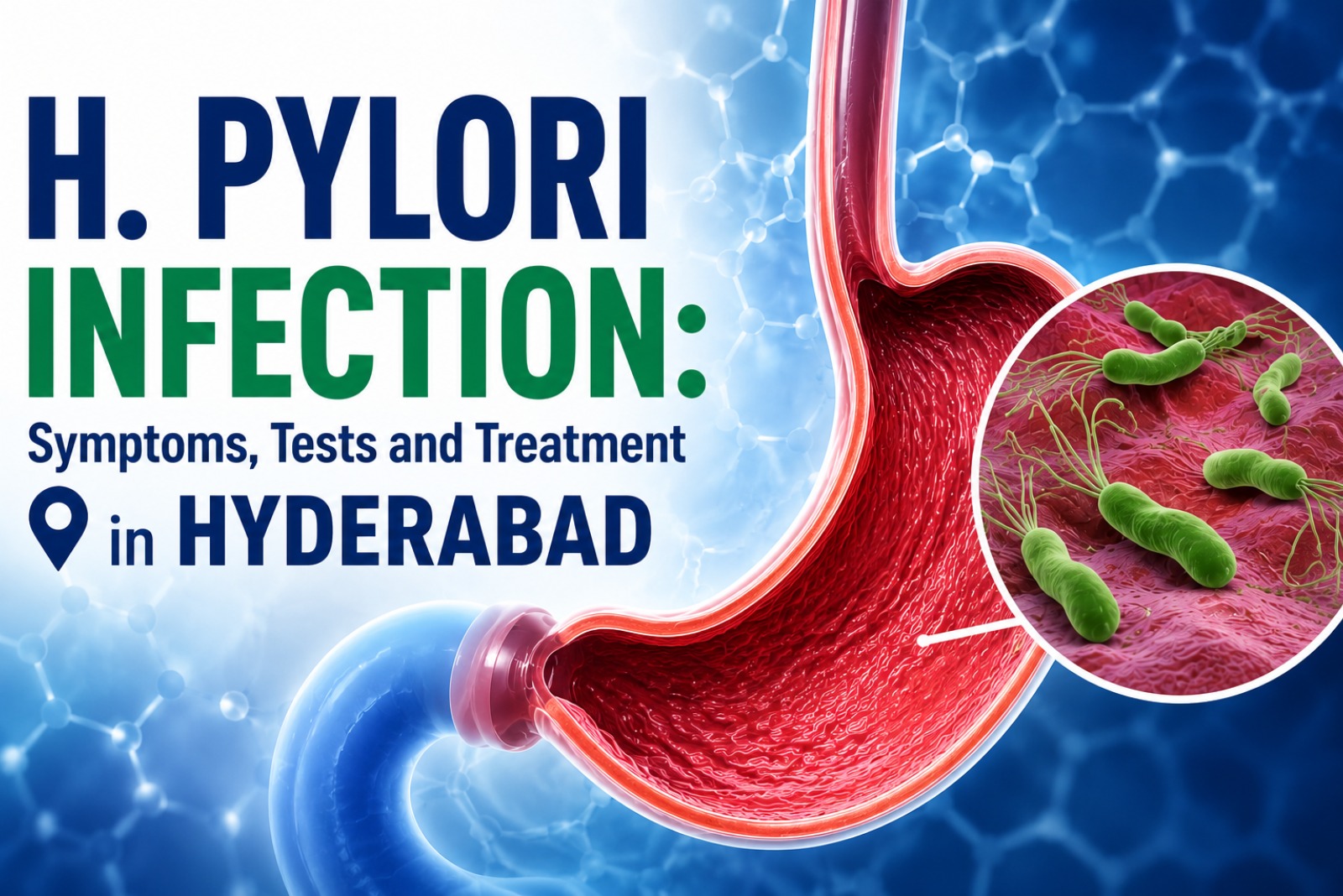
H. pylori is a spiral-shaped bacterium that lives in the stomach lining. Unlike most bacteria, it can survive the acid environment of the stomach by producing an enzyme called urease, which neutralises acid around it.
Over time, this bacterium causes inflammation of the stomach lining — a condition called gastritis. Left untreated, it erodes the protective mucus layer and creates peptic ulcers. In a small percentage of people, long-term infection is linked to stomach cancer.
The tricky part: most people with H. pylori infection have no obvious symptoms for years. The infection does its damage quietly.
How Does H. Pylori Spread in India?
H. pylori spreads through contaminated food, water, or direct contact with an infected person's saliva or faeces — what doctors call the faecal-oral route. In Indian households, where families share food and water sources, it tends to run through entire families.
Drinking unfiltered tap water, eating from roadside stalls with poor hygiene standards, or living in overcrowded conditions all raise the risk. The infection is usually acquired in childhood and stays for life if not treated.
What Are the Symptoms of H. Pylori Infection?
When symptoms do appear, the most common ones are:
- A burning or gnawing pain in the upper abdomen, usually worse on an empty stomach
- Nausea, particularly in the morning
- Excessive burping
- Bloating after meals
- A feeling of fullness even after eating small amounts
- Loss of appetite
- Unintentional weight loss
If the infection has progressed to an ulcer, you may notice dark or tarry stools, blood in vomit, or sharp pain that doesn't respond to antacids. At that point, this needs urgent medical attention — not more self-medication.
When Should You Get Tested?
You should consult a gastroenterologist and ask about H. pylori testing if:
- Your acidity or stomach pain keeps returning despite antacids or PPIs
- You've been diagnosed with a peptic ulcer
- A close family member has confirmed H. pylori infection
- You've had unexplained weight loss along with stomach symptoms
- You're experiencing dark stools or vomiting blood
Many patients in Hyderabad spend months cycling through antacid prescriptions from general physicians without ever being tested for the actual cause. H. pylori testing is simple, affordable, and should happen much earlier than it typically does.
How Is H. Pylori Diagnosed?
There are several ways to test for H. pylori, and not all of them are equally useful:
Urea Breath Test
You swallow a urea capsule and breathe into a bag. If H. pylori is present, it breaks down the urea and releases carbon dioxide, which is detected in your breath. Non-invasive, highly accurate, and the best option for initial diagnosis and post-treatment confirmation.
Stool Antigen Test
A stool sample is tested for H. pylori proteins. Accurate and widely available. Good for diagnosis and for confirming the infection has cleared after treatment.
Blood Antibody Test
Can detect antibodies to H. pylori but cannot distinguish between a current and a past infection. Importantly, it can remain positive for years after successful treatment. Do not use this test to confirm eradication — it will give you a false positive.
Endoscopy with Biopsy (Rapid Urease Test)
When an endoscopy is already being done to look at the stomach, a small tissue sample (biopsy) is taken from the stomach lining and tested. This is the most direct method and also allows the doctor to assess for ulcers, gastritis, or any other abnormality at the same time.
What Is the Right Treatment for H. Pylori?
This is where a lot of patients go wrong. H. pylori cannot be cleared with a single antibiotic — it requires a combination of medications taken together, usually for 10 to 14 days.
A standard regimen includes a proton pump inhibitor (PPI) to reduce stomach acid, combined with two antibiotics — most commonly amoxicillin and clarithromycin. However, antibiotic resistance patterns in India mean the choice of antibiotics should be guided by local resistance data, not just a standard template.
In cases where first-line treatment has failed or where resistance is suspected, doctors may choose a bismuth-based quadruple regimen or a vonoprazan-based regimen — newer options now available in India.
One thing that must not be skipped: after completing the full course of treatment, confirm eradication with a urea breath test or stool antigen test, at least 4 weeks after stopping medication. Many patients assume they're cured once symptoms disappear — but the bacteria can persist without causing immediate symptoms.
Can You Prevent Reinfection?
Reinfection rates in India are higher than in Western countries because the routes of transmission remain active in many homes. After successful treatment:
- Wash hands thoroughly with soap before meals and after using the toilet
- Drink treated, boiled, or filtered water — not municipal tap water directly
- Be cautious about food hygiene — particularly at roadside stalls
- If other household members have symptoms, have them tested too
H. pylori does not protect you against reinfection. If the source in your household isn't addressed, reinfection is possible.
A Note on Self-Medication
In Hyderabad — and across India — many patients buy antacids, PPIs, or even antibiotics over the counter and self-treat for months. This doesn't cure H. pylori. It may temporarily suppress symptoms while the bacteria continue damaging the stomach lining. It also contributes to antibiotic resistance, making eventual treatment harder.
If your stomach symptoms have been going on for more than two weeks, or if they keep coming back, you need a diagnosis — not more antacids.
Treating H. Pylori at KIMS KAGE
At KIMS KAGE, Secunderabad, the gastroenterology team sees a significant number of patients with H. pylori-related conditions — from straightforward gastritis to complicated ulcers and GERD that hasn't responded to standard treatment.
The approach here starts with an accurate diagnosis before prescribing treatment. For patients already on antacids or PPIs, the testing protocol is adjusted accordingly (PPIs can affect test accuracy and need to be stopped before a breath test). Treatment regimens are chosen based on the patient's history, any prior antibiotic use, and confirmed eradication is followed up with a repeat test.
If you've been living with recurring stomach symptoms and haven't been tested for H. pylori, that's the right next step.
Book a consultation at KIMS KAGE, KIMS Hospitals, Secunderabad — call +91-7288842255 or visit kimskage.com.
Frequently Asked Questions
No. H. pylori does not clear spontaneously. Once established in the stomach lining, it requires antibiotic treatment to eradicate. Without treatment, it can persist for decades.
A standard course is 10 to 14 days. After completing treatment, wait at least 4 weeks before doing a confirmatory test to check whether the infection has cleared.
Yes, it can spread through contaminated food, water, and saliva. It commonly spreads within families. If one household member is diagnosed, it's worth having others with symptoms tested as well.
In most cases, yes. Once H. pylori is eradicated, stomach ulcers have a much better chance of healing and are significantly less likely to recur — especially if NSAIDs like ibuprofen are avoided.
Yes, though certain foods may aggravate symptoms during treatment. Smaller, more frequent meals tend to be easier on the stomach. Avoid alcohol during the treatment course as it can affect antibiotic efficacy and worsen stomach inflammation.