
By Kage Team | 8 July 2026
Introduction
Hepatitis B is one of India's most under-diagnosed and yet most treatable chronic infections. With an estimated 40 million Indians living with chronic Hepatitis B (HBV) — roughly 3-4% of the population — India carries the world's second-highest burden after China. The frightening part? Most people don't know they have it. The good news? With modern antiviral therapy, ongoing monitoring at a dedicated Advanced Liver Care Clinic, and a highly effective vaccine, Hepatitis B can be controlled — and complications like cirrhosis and liver cancer can be prevented. This complete guide from the hepatology team at KAGE - KIMS Advanced Gastroenterology & Endoscopy, Secunderabad, explains what Hepatitis B is, how it spreads, who should get tested, how the blood tests work, current treatment options, and how the vaccine can protect your family for life.
Key Statistics
The numbers behind India's Hepatitis B burden tell the story:
- 40 million Indians live with chronic Hepatitis B — 3-4% of the population
- India carries the world's 2nd-largest HBV burden after China
- 80% of primary liver cancers in India are caused by Hepatitis B
- 90% of infants infected at birth become chronic carriers vs 5% of adults
- 15-40% of untreated chronic HBV cases progress to cirrhosis
- The Hepatitis B vaccine is 95% effective — with 3 doses providing lifelong protection
- HBV survives on surfaces for up to 7 days — 50-100x more infectious than HIV
- Modern antivirals suppress HBV in >98% of patients when taken correctly
What Is Hepatitis B?
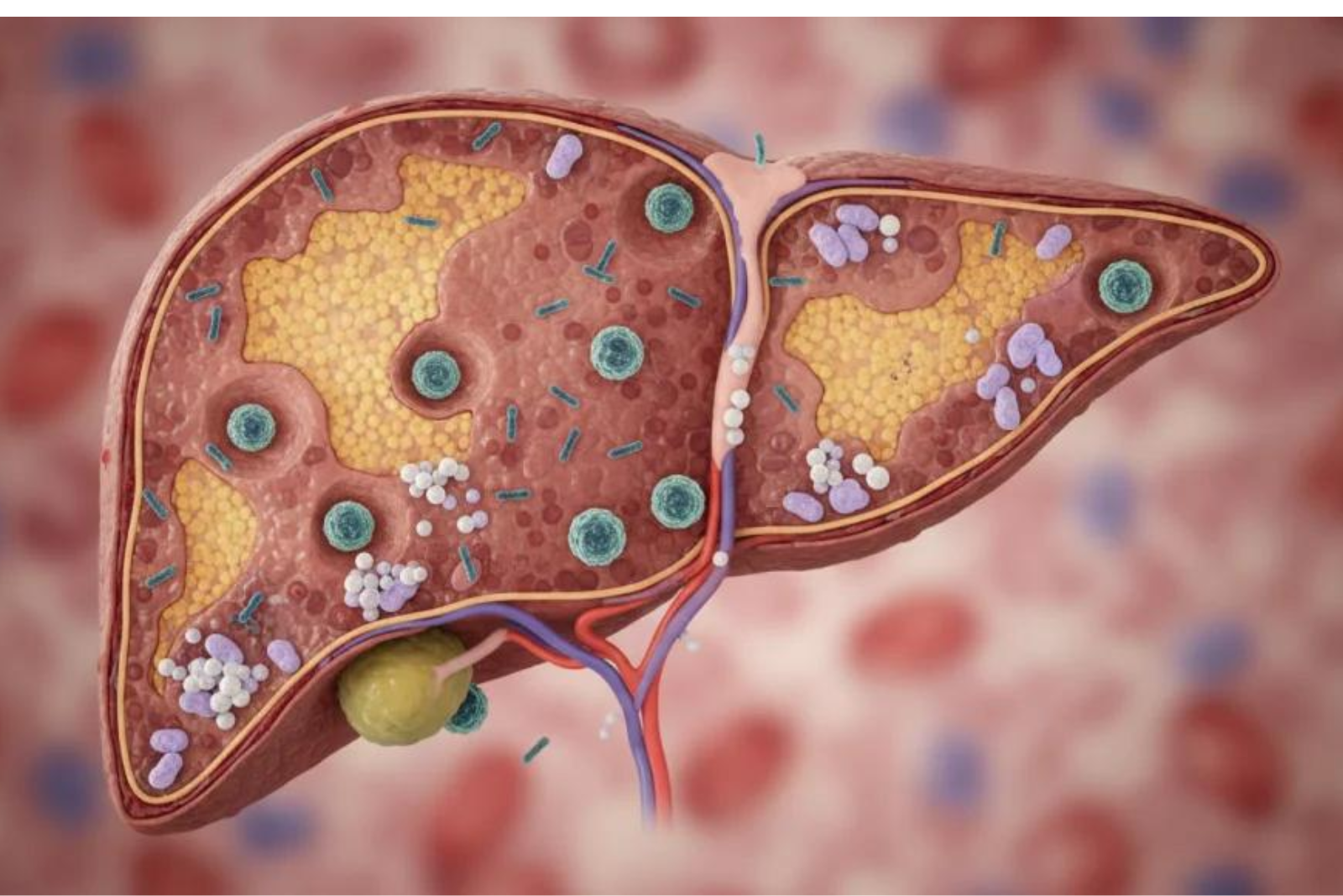
Hepatitis B is a viral infection of the liver caused by the Hepatitis B virus (HBV), a DNA virus that attacks liver cells and triggers inflammation. The infection can be acute (short-term, lasting less than 6 months) or chronic (lifelong, when the virus remains in the body for more than 6 months). Adults who catch HBV mostly clear the virus on their own — only about 5% become chronic carriers. But when infants are infected at birth, up to 90% develop chronic HBV. Chronic Hepatitis B silently damages the liver over decades, leading to cirrhosis in 15-40% of untreated patients and hepatocellular carcinoma (HCC) in around 25% of those with cirrhosis. Early diagnosis and structured monitoring at the Advanced Liver Care Clinic at KAGE - KIMS Hospitals, Secunderabad prevents these outcomes.
How Common Is Hepatitis B in India?
India carries a massive HBV burden. Approximately 40 million Indians are chronic HBV carriers, giving the country an intermediate-to-high endemic status (3-4% prevalence). The infection is unevenly distributed — tribal populations in certain states show rates as high as 15%, while urban populations average 1-2%. HBV causes an estimated 80% of primary liver cancers in India. Despite universal Hepatitis B vaccination being part of India's Universal Immunization Programme since 2011, coverage gaps mean many adults born before this remain unprotected. Testing is the single most effective step you can take today — a simple blood test at KAGE - KIMS Hospitals, Secunderabad tells you your status in 24-48 hours.
How Does Hepatitis B Spread?
HBV spreads through blood and body fluids — not through casual contact, food or water. The four main routes are: (1) Mother to child at birth — accounts for 40% of Indian chronic HBV cases; (2) Unsafe blood transfusions or unsterile medical/dental procedures; (3) Sexual contact with an infected person; (4) Sharing needles, razors or toothbrushes with an infected person. HBV is 50-100 times more infectious than HIV and can survive on surfaces for up to 7 days. The virus cannot spread through hugging, kissing (unless bleeding), sharing food, mosquito bites, or coughing/sneezing. The team at KAGE - KIMS routinely screens family members of every HBV-positive patient — a step that prevents household transmission.
Symptoms of Hepatitis B — Or the Lack of Them
Most people with chronic Hepatitis B have no symptoms for decades — which is why it's called a silent infection. When symptoms do appear, they often mean the disease has advanced significantly. Watch for: persistent fatigue and weakness, loss of appetite, unexplained weight loss, jaundice (yellowing of skin and eyes), dark urine, pale-coloured stools, abdominal pain in the right upper region, joint pain, and easy bruising or bleeding. Advanced cases show signs of cirrhosis — swelling of the legs and abdomen (ascites), vomiting blood from oesophageal varices, and mental confusion (hepatic encephalopathy). By the time these symptoms appear, significant liver damage has usually occurred. This is why the hepatology team at KAGE - KIMS Hospitals, Secunderabad recommends testing based on risk factors, not symptoms.
Who Should Get Tested for Hepatitis B?
The team at KAGE - KIMS recommends Hepatitis B screening for: everyone born to a HBV-positive mother, all pregnant women, adults born before 2000 who have never been tested, healthcare workers, dialysis patients, people with multiple sexual partners, people who inject drugs, family members of HBV-positive patients, people with unexplained abnormal liver-function tests, people with tattoos or piercings done in non-sterile settings, migrants from high-endemic regions, and everyone with a family history of liver cancer or cirrhosis. If you belong to any of these groups, walk into KAGE - KIMS Hospitals, Secunderabad for a simple, confidential blood test.
Hepatitis B Blood Tests Explained
There are five key blood markers used to diagnose and monitor HBV. HBsAg (Hepatitis B Surface Antigen) — positive means active infection (acute or chronic). Anti-HBs (Surface Antibody) — positive means immunity, either from past infection or vaccination. Anti-HBc (Core Antibody) — positive indicates past or present infection. HBeAg (e-antigen) — positive means high infectivity and active viral replication. HBV DNA — measures viral load in copies/mL, used to guide treatment decisions. Additional monitoring tests include liver-function tests (SGOT, SGPT, bilirubin), FibroScan for liver stiffness, ultrasound and alpha-fetoprotein (AFP) for HCC surveillance. All these tests are available under one roof at KAGE - KIMS Hospitals, Secunderabad — with reports typically ready within 24-48 hours.
Treatment: Modern Antivirals and Structured Monitoring
There is no complete 'cure' for chronic Hepatitis B — but modern antivirals can suppress the virus so effectively that patients live normal lives and avoid cirrhosis and liver cancer. Not every HBV-positive person needs immediate treatment. The Advanced Liver Care Clinic at KAGE - KIMS uses international AASLD, EASL and APASL guidelines to decide who needs treatment based on ALT levels, HBV DNA viral load, liver stiffness (FibroScan), age, and family history. The two first-line drugs used at KAGE - KIMS are Tenofovir Disoproxil Fumarate (TDF) and Entecavir — both taken as a single daily tablet with minimal side effects and no resistance in long-term use. Newer Tenofovir Alafenamide (TAF) is used for patients with kidney or bone concerns. Every treated patient receives 6-monthly monitoring including FibroScan, HBV DNA, LFTs, ultrasound and AFP for HCC surveillance.
Prevention: The Hepatitis B Vaccine
The Hepatitis B vaccine is one of medicine's greatest success stories — 95% effective, safe, and now part of India's routine childhood immunization. The 3-dose schedule (0, 1, 6 months) provides lifelong protection in most people. Adults who were not vaccinated in childhood should be checked with an Anti-HBs test — if the level is above 10 mIU/mL, they are immune. If not, they should complete the full 3-dose series. High-risk individuals (healthcare workers, dialysis patients) may need booster doses. Newborns of HBV-positive mothers receive both the vaccine and Hepatitis B Immunoglobulin (HBIG) within 12 hours of birth to prevent transmission. KAGE - KIMS Hospitals, Secunderabad offers full family vaccination programmes and post-exposure prophylaxis.
Living Well with Hepatitis B
A Hepatitis B diagnosis is not a death sentence — it's a manageable chronic condition. Key steps: attend all 6-monthly follow-up appointments at KAGE - KIMS, take antiviral medications exactly as prescribed and never stop them abruptly, avoid alcohol completely (it accelerates liver damage), get vaccinated against Hepatitis A, maintain a healthy weight and avoid fatty liver, discuss any new medications or supplements with the hepatology team (some are liver-toxic), get family members and sexual partners tested and vaccinated, and stay informed. HBV-positive women can have healthy pregnancies with proper planning — the KAGE - KIMS team coordinates with obstetricians for safe pregnancy management and prevents mother-to-child transmission in over 95% of cases.
Frequently Asked Questions
Not yet, but modern antivirals can suppress the virus to undetectable levels — allowing patients to live normal lives and preventing liver damage. The hepatology team at KAGE - KIMS Hospitals, Secunderabad offers lifelong monitoring and treatment programmes.
No. In India, mother-to-child transmission at birth accounts for 40% of cases, followed by unsterile medical procedures, blood transfusions, and shared needles. Sexual transmission is only one of several routes.
Not everyone with chronic HBV needs immediate treatment. The Advanced Liver Care Clinic at KAGE - KIMS uses HBV DNA levels, ALT, FibroScan and family history to decide — some patients only need 6-monthly monitoring.
Absolutely. With vaccination of partner and children (and HBIG for newborns), family transmission can be prevented in over 95% of cases. KAGE - KIMS provides pre-marital and pre-pregnancy counselling.
No. It's a simple blood test that takes 2 minutes, and results are ready within 24-48 hours at KAGE - KIMS Hospitals, Secunderabad. Walk-ins are welcome.