
By Kage Team | 26 May 2026
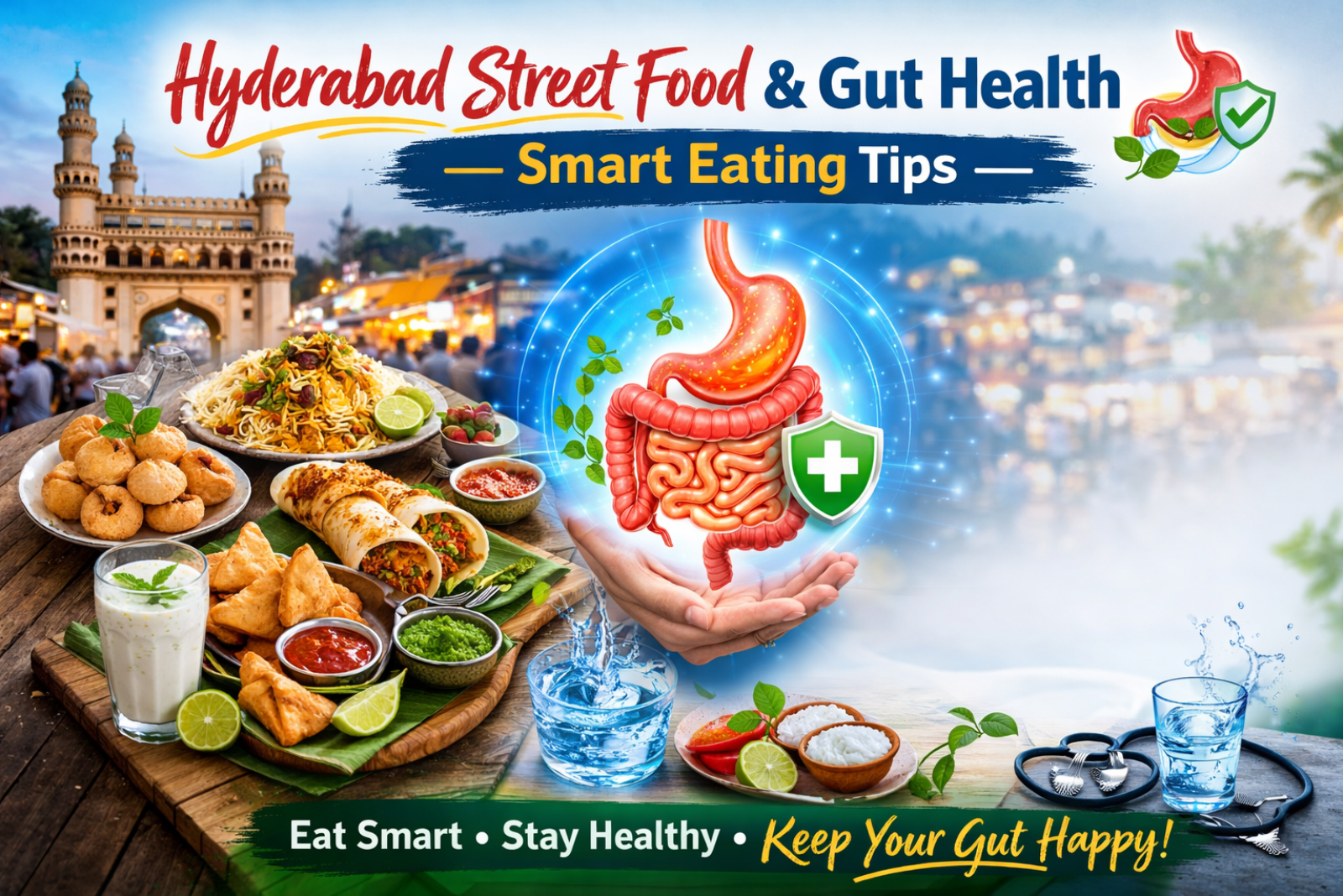
Hyderabad's street food is legendary — the sizzle of kebabs at Charminar, the cauldrons of haleem at Tolichowki, the lukhmi at Laad Bazaar, the irani chai at traditional cafes, the stuffed mirchi bajjis from roadside stalls, the biryani that defines the city. Street food is not just food in Hyderabad — it is culture, identity, and an irreplaceable part of daily life.
But for the digestive system, street food presents a set of challenges that every Hyderabadi should understand. At KIMS Advanced Gastroenterology & Endoscopy — KAGE — KAGE, KIMS Hospitals, Secunderabad, Secunderabad, Dr. Sreekanth Appasani and our team see firsthand the digestive consequences of street food-related infections, excess oil consumption, and foodborne illness across Hyderabad's population.
This blog is not about eliminating street food — it is about eating it smarter.
Why Hyderabad Street Food Can Challenge Gut Health
- Water and hygiene: Many street vendors use water from sources that may not be properly treated — risking exposure to H. pylori, E. coli, Salmonella, Entamoeba histolytica, Giardia, hepatitis A, and typhoid.
- Reused cooking oil: Deep frying oil reused multiple times degrades into harmful trans-fats and toxic aldehydes that damage the gut lining and liver.
- Excess oil and spice: While single servings are manageable, regular heavy street food consumption contributes to GERD, gastritis, gallstone risk, and fatty liver.
- Cold storage gaps: Chilled foods exposed to ambient Hyderabad temperatures during summer months can breed bacteria rapidly — a significant risk for food poisoning.
- Inadequate handwashing: Vendor hand hygiene is variable — a direct transmission route for fecal-oral pathogens.
Common Gut Problems Linked to Street Food in Hyderabad
- Acute gastroenteritis: Sudden vomiting and diarrhea from bacterial (Salmonella, E. coli), viral (norovirus, rotavirus), or parasitic (Giardia, Entamoeba) contamination. Extremely common after high-risk street food.
- H. pylori gastritis: Chronic infection from contaminated water and food — over 50% prevalence in India. Causes peptic ulcer disease and gastric cancer risk.
- Typhoid fever: Salmonella typhi from contaminated water or food — still prevalent in Hyderabad.
- Hepatitis A: Fecal-oral transmission through contaminated food and water — causes acute liver inflammation.
- Post-infectious IBS: IBS developing after a bout of street food-related gastroenteritis — a recognized and underappreciated complication.
- Worsening GERD and gastritis: Very spicy, oily street foods are among the most potent GERD triggers for susceptible individuals.
10 Smart Eating Tips for Hyderabad Street Food Lovers
1. Choose Hot, Freshly Cooked Food
Food that is visibly freshly cooked — smoking hot from the pan or grill — is the safest option. Heat kills most pathogens. Avoid cold dishes, cut fruits, and anything that has been sitting out for more than an hour — especially in summer.
2. Observe the Stall's Cleanliness
A clean stall with visible handwashing facilities, covered food, and hygienic handling is significantly safer than one with open, uncovered food and poor hygiene. Busy stalls with high turnover are generally safer — food does not sit out long enough to spoil.
3. Avoid Raw Salads and Cut Fruits
Raw vegetables and cut fruits at street stalls are washed with tap water and cut with shared knives — two of the highest-risk items for enteric infection in Hyderabad. Cooked food is far safer than raw.
4. Be Cautious With Water Sources
Pani puri (golgappa), flavoured sherbets, cane juice, and drinks mixed with local water are among the highest-risk items for waterborne infection. Opt for sealed packaged beverages or fresh coconut water from whole coconuts over freshly squeezed juices at roadside stalls.
5. Know Your Personal Trigger Foods
If you have GERD, IBS, gastritis, or gallstone disease, certain street foods are more likely to trigger symptoms — particularly very spicy mirchi items, deep-fried snacks, heavy meat dishes, and oily gravies. Identifying your personal triggers and exercising selective restraint — rather than complete avoidance — is the sustainable approach.
6. Do Not Eat on an Empty Stomach
Eating rich, spicy street food on a completely empty stomach significantly increases the risk of acid reflux, gastritis symptoms, and gut discomfort. Have a light meal or snack before venturing to a street food area.
7. Wash Your Hands
The simplest and most effective intervention — wash your hands with soap before eating street food. Hand sanitiser is a useful backup where handwashing is not possible. Enteric infections transmitted by unwashed hands are entirely preventable.
8. Stay Well Hydrated
Dehydration worsens the gut's resilience to irritants and pathogens. Drinking adequate water through the day — from safe, clean sources — supports the gut's protective mucus layer and immune defenses.
9. Trust Your Gut
If a stall smells off, if the oil looks very dark, if the food has been sitting out uncovered in the heat — trust your instincts and move on. Your gut will thank you.
10. Know When to See a Doctor
Acute gastroenteritis that lasts more than 2–3 days, involves blood in the stool, causes high fever, or causes significant dehydration (dry mouth, dizziness, very dark urine) warrants medical assessment. Repeated bouts of gut trouble after street food, or persistent symptoms following an acute illness, should be investigated at KAGE, KIMS Hospitals, Secunderabad, Secunderabad.
Conclusion
Gut trouble after street food? Get specialist care at KAGE, KIMS Hospitals, Secunderabad. Call: +91-7288842255
Frequently Asked Questions
Haleem — slow-cooked wheat and meat — is generally safe when freshly made and consumed hot from reputable establishments. It is a slow-cooked dish with prolonged cooking time, which kills most pathogens. As with all street food, freshness, cleanliness of preparation, and eating it hot are the key safety factors.
Mild food poisoning (diarrhea and vomiting) typically resolves within 24–48 hours with oral rehydration, rest, and bland diet. Serious symptoms — bloody diarrhea, fever above 39°C, severe dehydration, or symptoms lasting more than 2–3 days — require immediate medical attention. KAGE at KIMS Hospitals, Secunderabad, provides prompt assessment for acute gastroenteritis.
Regular consumption of very spicy, very oily street food is a significant trigger for GERD symptoms in susceptible individuals. The combination of excess fat and capsaicin relaxes the lower esophageal sphincter, while large portions increase stomach pressure — both promoting acid reflux. If you notice heartburn consistently after street food, a consultation with KAGE's gastroenterologists can identify whether you have GERD and guide management.
Irani chai — Hyderabad's beloved strong, milky tea — is not inherently harmful in moderation. However, drinking multiple cups daily on an empty stomach increases gastric acid production and can worsen GERD and gastritis symptoms. The caffeine content also relaxes the lower esophageal sphincter. If you have GERD or gastritis, limiting irani chai to 1–2 cups daily with food is advisable.
KIMS Advanced Gastroenterology & Endoscopy — KAGE — KAGE provides rapid assessment for acute GI infections including gastroenteritis, food poisoning, and parasitic infections. C/O Gastroenterology Dept, KIMS Hospitals, 1-8-31/1, Minister Road, Secunderabad, Hyderabad – 500003. Call +91-7288842255.