
By Kage Team | 16 September 2026
Introduction
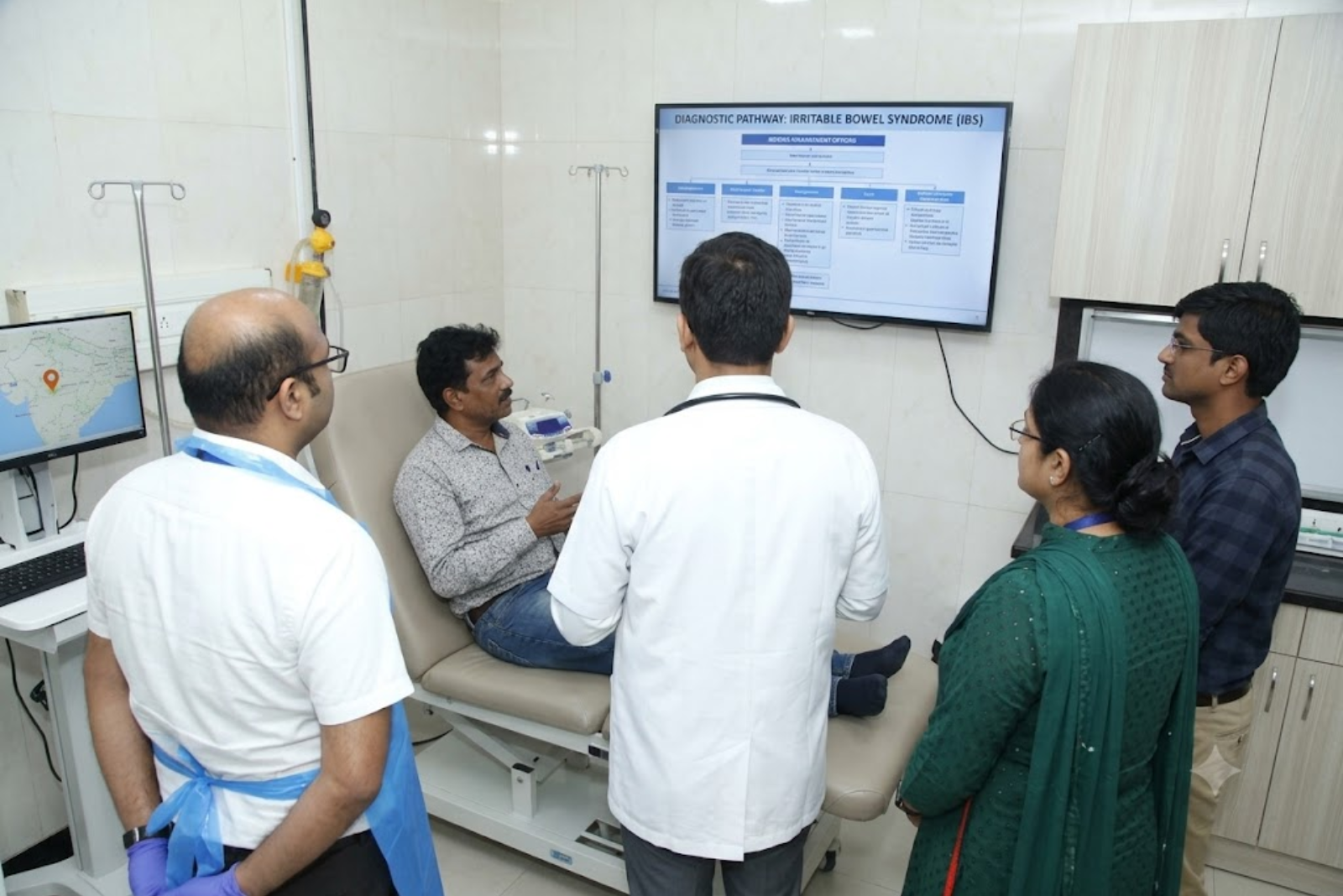
IBS has an odd reputation among digestive conditions: common enough that most people have heard of it, but vague enough that many patients aren't sure what an actual diagnosis or treatment plan looks like beyond "manage your diet." If you're searching for an IBS doctor, it's worth knowing what a proper evaluation actually involves before you go in — partly so you know what to expect, and partly so you can tell whether the care you're getting is thorough or just a label attached to unexplained symptoms.
What does an IBS doctor actually do differently from a general physician?
A gastroenterologist evaluating for IBS applies specific diagnostic criteria (the Rome IV criteria) rather than diagnosing by exclusion alone, actively rules out red flag conditions that can mimic IBS, identifies which IBS subtype you have — since treatment differs meaningfully by subtype — and builds a treatment plan around diet, medication, and in some cases the gut-brain connection, rather than defaulting to a single generic recommendation.
How IBS Is Actually Diagnosed
IBS is diagnosed using specific criteria — recurrent abdominal pain, on average at least one day a week in the last three months, associated with changes in stool frequency or form. Reaching this diagnosis properly also means ruling out red flags first: blood in stool, unexplained weight loss, symptom onset after age 50, or a family history of IBD or colorectal cancer. If any of these are present, further testing — often including colonoscopy or blood work — comes before an IBS diagnosis is settled on, not after.
The Subtypes of IBS, and Why They Matter for Treatment
- IBS-C (constipation-predominant) — treatment focuses on fiber, hydration, and specific medications for constipation-type IBS
- IBS-D (diarrhea-predominant) — treatment differs meaningfully, often including specific anti-diarrheal or gut-targeted medications
- IBS-M (mixed) — alternating patterns, requiring a more individualized approach
Treatment Approaches: Diet, Medication, and the Gut-Brain Connection
The low FODMAP diet — temporarily restricting certain fermentable carbohydrates, then systematically reintroducing them — has real evidence behind it for many IBS patients, though it's meant to be done under guidance rather than as an indefinite restrictive diet on your own. Beyond diet, subtype-specific medications, and for patients where stress and gut symptoms clearly interact, gut-directed approaches addressing the gut-brain axis can meaningfully help — this isn't "it's all in your head," it reflects a well-documented physiological connection between gut and nervous system function.
When IBS-Like Symptoms Are Actually Something Else
This is exactly why a proper diagnosis matters rather than self-labeling based on internet symptom checkers. Conditions including inflammatory bowel disease, celiac disease, lactose intolerance, and small intestinal bacterial overgrowth (SIBO) can all present with symptoms resembling IBS, and each has a genuinely different treatment approach. A gastroenterologist evaluating you properly will consider these possibilities as part of reaching an accurate diagnosis, not just accept a self-applied IBS label.
- Advanced Motility Clinic
Type: Speciality Clinic
- IBD Clinic
Type: Speciality Clinic
- Endoscopy and Colonoscopy: What to Expect During the Procedure
Type: Blog
- Olympus X1 HD Endoscope & Colonoscope
Type: Equipment
- Breath Tests
Type: Equipment
- Advanced Endoscopy Clinic
Type: Speciality Clinic
- Our Doctors at KAGE Hyderabad
Type: Doctor Profile
Frequently Asked Questions
IBS itself doesn’t damage the intestines or increase cancer risk, unlike inflammatory bowel disease, but it can significantly affect quality of life and deserves proper management rather than being dismissed as minor.
IBS is generally managed rather than cured — most patients find that the right combination of diet, medication, and sometimes gut-directed therapy substantially controls symptoms, even though the underlying tendency may remain.
IBS (irritable bowel syndrome) is a functional disorder without visible inflammation or tissue damage, while IBD (inflammatory bowel disease, including Crohn’s and ulcerative colitis) involves actual inflammation and requires different, more intensive treatment. This distinction is exactly why ruling out IBD is part of a proper IBS workup.
It’s better to have a proper diagnosis first, since IBS-like symptoms can have other causes the diet won’t address, and the diet works best when guided through its restriction and structured reintroduction phases rather than followed indefinitely without guidance.