
By Kage Team | 26 May 2026
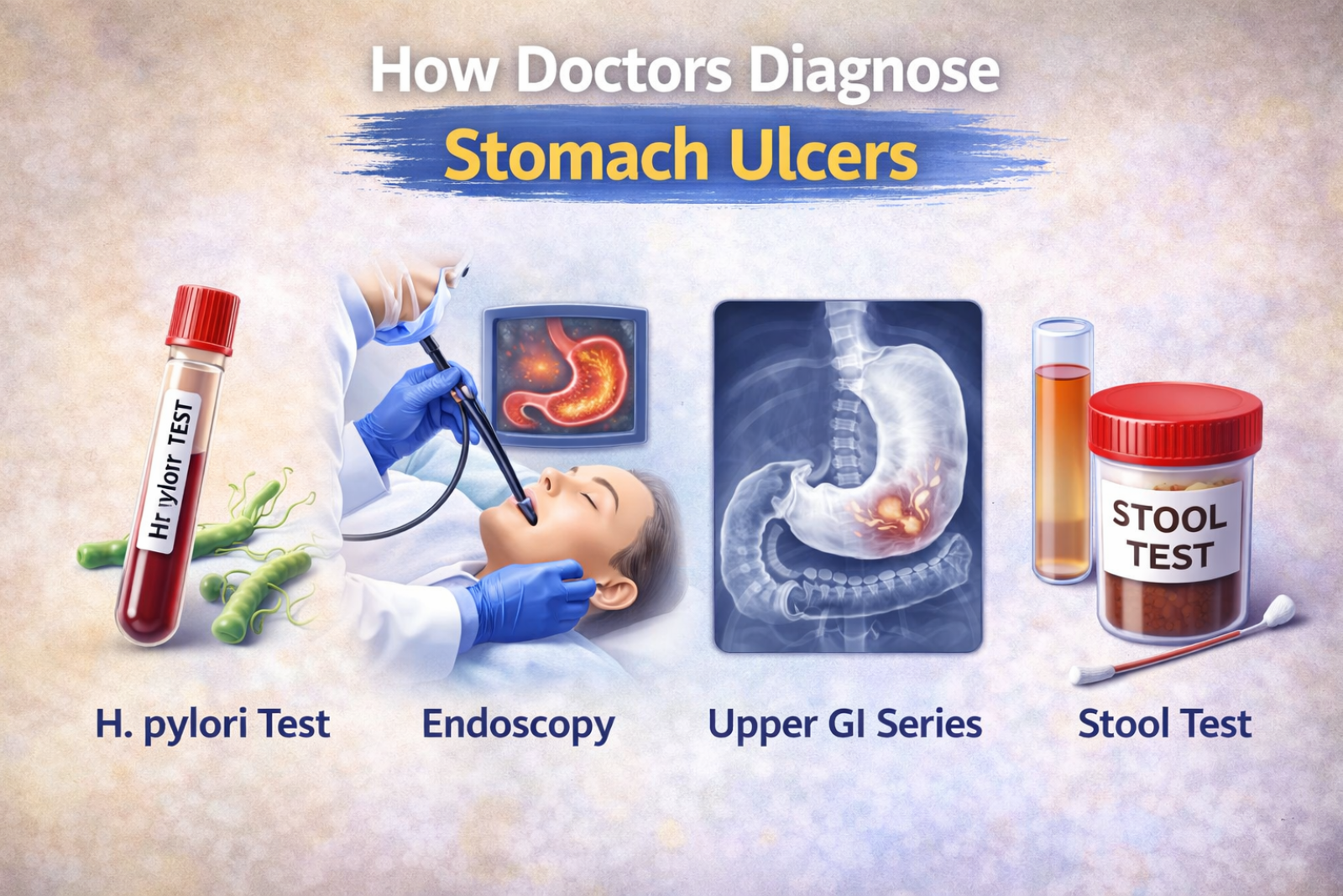
Modern peptic ulcer treatment is remarkably effective — when it targets the right cause. The days of managing ulcers indefinitely with antacids alone are over. With precise diagnosis of the underlying cause — most commonly H. pylori infection or NSAID use — and appropriate targeted treatment, the vast majority of peptic ulcers can be healed permanently.
At KIMS Advanced Gastroenterology & Endoscopy — KAGE — KAGE, KIMS Hospitals, Secunderabad, Secunderabad, Dr. Sreekanth Appasani and our specialist team provide the most comprehensive peptic ulcer treatment in Hyderabad — from H. pylori eradication and optimized PPI regimens to emergency endoscopic haemostasis for bleeding ulcers.
Treatment Goals in Peptic Ulcer Disease
- Relieve pain and symptoms promptly
- Heal the mucosal defect
- Eradicate H. pylori if present — the most important step for preventing recurrence
- Eliminate other causative factors (NSAIDs, smoking, alcohol)
- Prevent complications (bleeding, perforation, obstruction)
- Confirm healing with repeat endoscopy for gastric ulcers
Medical Treatment of Stomach Ulcers at KAGE
1. Proton Pump Inhibitors (PPIs) — The Cornerstone of Ulcer Healing
PPIs are the most effective medications for reducing stomach acid and enabling ulcer healing. Examples: omeprazole (Omez), pantoprazole (Pan), rabeprazole (Razo), esomeprazole, lansoprazole. For uncomplicated duodenal ulcers — 4–8 weeks of PPI therapy. For gastric ulcers — 8–12 weeks, with repeat endoscopy to confirm healing. PPIs should always be taken 30 minutes before breakfast for optimal efficacy.
2. H. pylori Eradication Therapy — Curing the Root Cause
H. pylori eradication is the single most important treatment for H. pylori-positive peptic ulcers. Standard first-line therapy (Triple Therapy): PPI + Amoxicillin + Clarithromycin for 14 days. Quadruple therapy (for clarithromycin-resistant H. pylori): PPI + Bismuth + Metronidazole + Tetracycline for 10–14 days. Eradication rates at KAGE using optimized regimens exceed 90%. A post-treatment urea breath test confirms eradication. H. pylori eradication dramatically reduces ulcer recurrence from >70% to less than 5% over 5 years.
3. H2 Receptor Blockers
Less potent than PPIs — used in milder cases or as supplementary therapy for nocturnal acid suppression.
4. Antacids and Alginates
For immediate symptom relief only — do not heal ulcers. Useful adjuncts for on-demand pain relief.
5. Sucralfate
A mucosal protectant that forms a protective paste over the ulcer base — useful particularly for NSAID-related ulcers and in pregnancy where PPIs are less preferred.
6. Misoprostol
A prostaglandin analogue that protects the gastric mucosa — used as gastroprotection in patients who must continue NSAIDs and cannot tolerate PPIs.
Endoscopic Treatment for Complicated Ulcers at KAGE
Endoscopic Haemostasis for Bleeding Ulcers
Bleeding peptic ulcers are the most common cause of upper GI haemorrhage — a potentially life-threatening emergency. At KAGE, KIMS Hospitals, Secunderabad, Secunderabad, Dr. Sreekanth Appasani and our team provide 24/7 emergency endoscopic haemostasis for bleeding ulcers — using: adrenaline injection (reduces acute bleeding); thermal coagulation (heater probe, argon plasma coagulation — burns blood vessels shut); mechanical methods (endoclips — titanium clips that mechanically seal the bleeding vessel). Endoscopic haemostasis achieves primary bleeding control in over 90% of cases.
Treatment of Pyloric Stenosis
Scarring from chronic duodenal ulcers can narrow the gastric outlet (pyloric stenosis), causing persistent vomiting and weight loss. At KAGE, this is treated endoscopically with balloon dilatation of the pylorus — avoiding surgery in most cases.
Lifestyle Treatment — Essential for Ulcer Healing and Prevention
- Complete NSAID and aspirin cessation where medically possible
- Stop smoking — dramatically impairs ulcer healing and doubles recurrence risk
- Eliminate alcohol — directly toxic to the ulcer base
- Ulcer-friendly diet as described in the companion blog
- Stress management — does not cure ulcers but reduces acid surge and pain
Conclusion
Stomach ulcer? Get definitive treatment at KAGE, KIMS Hospitals, Secunderabad. Call: +91-7288842255
Frequently Asked Questions
Duodenal ulcers typically heal in 4–8 weeks with PPI therapy and H. pylori eradication. Gastric ulcers require 8–12 weeks. Healing is confirmed by repeat endoscopy at KAGE. Without H. pylori eradication, ulcers heal temporarily but recur in over 70% of cases within a year.
Untreated ulcers may lead to: persistent pain and impaired quality of life; bleeding — the most common complication, causing anaemia or life-threatening haemorrhage; perforation — the ulcer erodes through the stomach wall into the abdominal cavity; penetration — the ulcer erodes into an adjacent organ, usually the pancreas; and gastric outlet obstruction from scarring. All are preventable with timely treatment.
Surgery for peptic ulcers is now rare — modern PPI therapy and H. pylori eradication have reduced surgical ulcer complications dramatically. Surgery may be needed for: perforation (emergency repair); refractory bleeding not controlled endoscopically; gastric outlet obstruction not responding to endoscopic dilatation; or ulcers caused by an unresectable gastrinoma. In expert hands at KAGE, endoscopic management handles the vast majority of ulcer complications without surgery.
No — any alcohol intake during active ulcer treatment directly irritates the ulcer base, impairs mucosal healing, and increases the risk of bleeding. Alcohol should be completely avoided until the ulcer is confirmed healed on repeat endoscopy. After healing, moderate alcohol use (if resumed) should always accompany food and be significantly reduced compared to pre-illness habits.
C/O Gastroenterology Dept, KIMS Hospitals, 1-8-31/1, Minister Road, Secunderabad, Hyderabad – 500003. Open Monday to Saturday, 9:00 AM to 5:30 PM. Call +91-7288842255 or email appointments.kage@gmail.com.