
By Kage Team | 26 May 2026
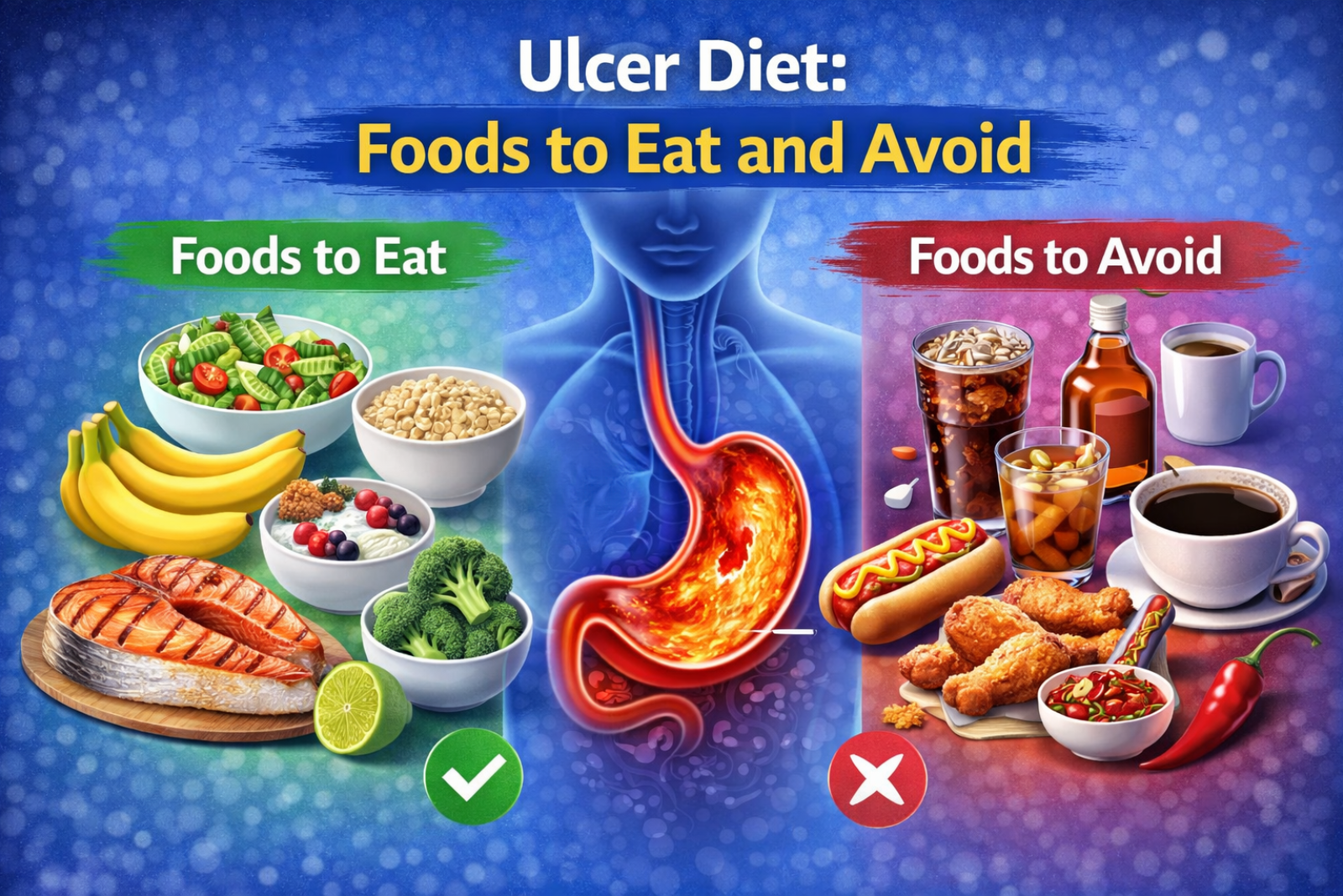
Diet is not a cure for stomach ulcers — the ulcer requires medical treatment to heal. But the right dietary choices can significantly reduce pain, support mucosal healing, and prevent exacerbation of symptoms, while the wrong foods can worsen pain, delay healing, and trigger complications.
For Indian patients, navigating an ulcer diet means adapting the principles of ulcer-friendly eating to the reality of Indian cooking and culture. At KIMS Advanced Gastroenterology & Endoscopy — KAGE — KAGE, KIMS Hospitals, Secunderabad, Secunderabad, dietary guidance is a central part of the peptic ulcer management plan provided by Dr. Sreekanth Appasani and our specialist team.
Principles of an Ulcer-Friendly Diet
- Avoid foods and drinks that increase acid production or irritate the already-damaged mucosal lining
- Choose foods that promote healing and support the stomach's protective mucus layer
- Eat smaller, more frequent meals rather than large meals — smaller portions reduce the acid surge after eating
- Do not skip meals — an empty stomach means acid has nothing to buffer against except the ulcer
- Eat slowly and chew thoroughly — reduces the gastric workload
Best Foods for Ulcer Healing — Indian Kitchen
Soothing, Gut-Protective Foods
- Curd (dahi) — probiotics reduce H. pylori colonization and support mucosal integrity; eat plain, not sweetened
- Banana — contains compounds that stimulate mucus secretion in the stomach, providing a protective coating over the ulcer
- Oats — soluble fibre forms a gel that coats and protects the gastric lining
- Honey — has antimicrobial properties against H. pylori and promotes mucosal healing
- Coconut water — alkaline, soothing, and hydrating; reduces gastric acidity
- Boiled or steamed vegetables — lauki (bottle gourd), turai, and ash gourd are cooling and easily digestible
- Steamed idli and plain dosa — easily digestible fermented staples that are low-acid and gentle on the stomach
- Plain dal (not heavily spiced) — protein for mucosal repair without acid-stimulating additives
- Eggs (boiled or poached) — high-quality protein for tissue repair; avoid frying
- Whole grains: oats, ragi, brown rice — reduce acid secretion and provide fibre
Herbal and Traditional Remedies With Evidence
- Licorice (mulethi) root: Deglycyrrhizinated licorice (DGL) has evidence for ulcer healing — stimulates mucus production. Available as supplements.
- Turmeric (haldi): Curcumin inhibits H. pylori adhesion and has anti-inflammatory effects on the gastric mucosa — use in cooking daily.
- Ginger (adrak): Has anti-H. pylori activity and anti-inflammatory properties; use fresh ginger in mild quantities.
Foods to Avoid With an Ulcer
Foods That Increase Acid Production
- Coffee and strong tea — stimulate gastric acid secretion; avoid on an empty stomach
- Carbonated drinks — increase intragastric pressure and irritate the ulcer
- Alcohol — directly erodes the gastric mucosa and impairs ulcer healing
- Citrus fruits and juices (lemon, orange, tomato) — highly acidic; avoid until the ulcer heals
Foods That Irritate the Ulcer Directly
- Very spicy foods — chilli, mirchi bajji, heavily spiced curries, biryani during active ulcer flares
- Deep-fried foods — delay gastric emptying and increase acid reflux
- Processed and packaged snacks — high in salt, preservatives, and refined fats
- Red and processed meat — harder to digest; avoid during active ulcer phase
NSAIDs and Aspirin
- Ibuprofen, diclofenac, aspirin — if you must take them, always with food and with a PPI prescribed by your KAGE doctor — never on an empty stomach
Sample Indian Ulcer Diet — A Day's Menu
- Morning: Warm water (not hot) with a teaspoon of honey. Oats porridge or ragi porridge with banana.
- Mid-morning: Plain curd or a glass of coconut water.
- Lunch: Plain rice with moong dal (mildly spiced), steamed lauki sabzi, plain curd.
- Evening: Boiled banana, plain khakhra, or a small bowl of oats.
- Dinner: Two idlis with mild sambar (no chilli excess), steamed vegetables, plain curd.
- Before bed: A small glass of warm milk — buffers acid overnight; helps with nocturnal ulcer pain.
Conclusion
Stomach ulcer? Get expert treatment and dietary guidance at KAGE, KIMS Hospitals, Secunderabad. Call: +91-7288842255
Frequently Asked Questions
Warm milk provides short-term symptom relief by buffering stomach acid — particularly for nocturnal duodenal ulcer pain. However, milk also stimulates acid secretion 30–60 minutes after consumption (calcium-stimulated acid rebound) — so it is not a treatment and should not be consumed in large quantities as a remedy. A small glass at night is reasonable for symptom relief.
Yes — plain white or brown rice is among the safest foods for ulcer patients. It is easily digestible, has a buffering effect on gastric acid, and is non-irritating to the gastric mucosa. Combine with moong dal and plain vegetables for a complete, ulcer-friendly Indian meal.
Very spicy food is not the cause of ulcers — H. pylori and NSAIDs are. However, capsaicin in chilli directly irritates an existing ulcer, worsens pain, delays mucosal healing, and can trigger bleeding from a vulnerable ulcer surface. During active ulcer treatment, very spicy food should be significantly reduced.
During active ulcer treatment (typically 4–8 weeks of PPI therapy and, if applicable, H. pylori eradication), an ulcer-conscious diet should be followed strictly. After confirmed healing on repeat endoscopy at KAGE, diet can be gradually liberalized — though maintaining the habit of avoiding NSAID misuse and excess alcohol protects against recurrence.
C/O Gastroenterology Dept, KIMS Hospitals, 1-8-31/1, Minister Road, Secunderabad, Hyderabad – 500003. Open Monday to Saturday, 9:00 AM to 5:30 PM. Call +91-7288842255 or email appointments.kage@gmail.com.