
By Kage Team | 26 May 2026
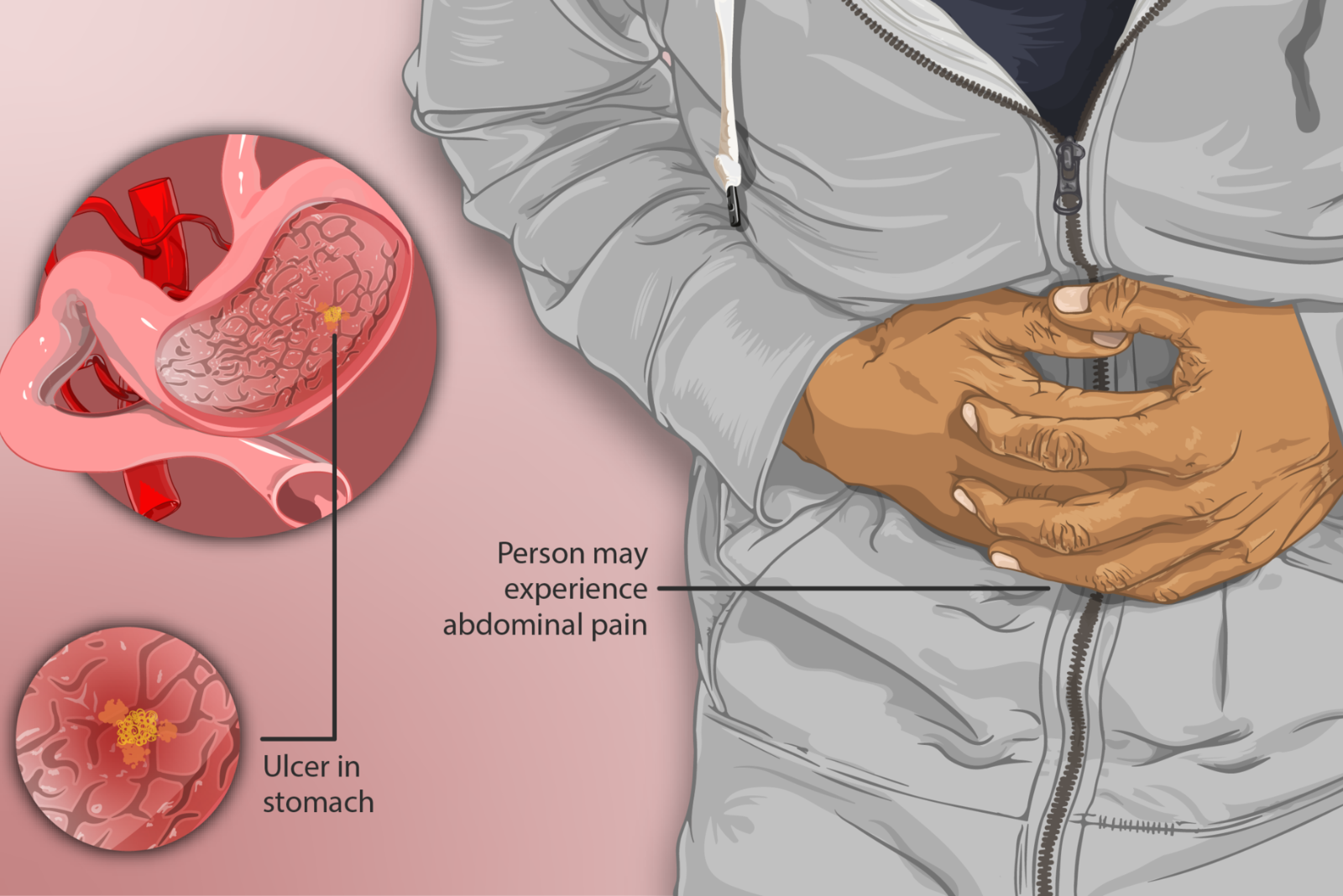
Pain is the most defining and most distressing symptom of a stomach ulcer — and understanding where it occurs, how it feels, and what makes it better or worse can make the difference between recognizing an ulcer early and spending years mismanaging it as acidity.
At KIMS Advanced Gastroenterology & Endoscopy — KAGE — KAGE, KIMS Hospitals, Secunderabad, Secunderabad, Dr. Sreekanth Appasani and our team assess every patient's pain pattern carefully as part of the diagnostic process — because the character of ulcer pain provides important clinical clues about the location and nature of the ulcer.
Where Ulcer Pain Is Located
- Epigastric region: The classic ulcer pain location — the upper middle abdomen, beneath the breastbone and above the navel. This is where the stomach and duodenum lie, and where most ulcers are felt.
- Left upper abdomen: Gastric ulcers on the greater curve may produce pain that is felt more to the left.
- Right upper abdomen: Duodenal ulcers and those near the pylorus may cause pain that radiates to the right.
- Radiation to the back: An important warning sign — posterior penetration of a stomach or duodenal ulcer into the pancreas causes pain that radiates straight through to the mid-back. This indicates a complicated, penetrating ulcer requiring urgent evaluation.
How Ulcer Pain Feels
- Burning: The most classic descriptor — a burning, corrosive sensation in the upper abdomen, as though stomach acid is dissolving the lining from within.
- Gnawing or aching: A persistent, deep gnawing or aching quality — distinct from the sharp, stabbing pain of gallstones or the crampy pain of IBS.
- Hunger-like pain: Many duodenal ulcer patients describe the pain as resembling intense hunger — because the pain improves transiently after eating (as food buffers the acid) and returns when the stomach empties.
- Dull heaviness: Some patients describe a dull, heavy pressure rather than sharp pain — particularly with gastric ulcers.
Pain Patterns That Help Distinguish Gastric from Duodenal Ulcers
Gastric Ulcer Pain Pattern
- Pain typically worsens 30–60 minutes after eating — as acid production increases in response to food
- Eating may provide no relief — or may worsen the pain
- Pain may cause food avoidance, leading to weight loss
Duodenal Ulcer Pain Pattern
- Pain typically improves immediately after eating (food buffers acid) — then returns 2–3 hours later when the stomach empties
- Pain commonly occurs at night (1–3 AM) — acid surges overnight
- Pain is relieved by antacids — more so than gastric ulcer pain
Pain That Means an Ulcer Has Complicated
Any sudden, severe, generalised abdominal pain in an ulcer patient must be treated as a perforation emergency. Do not wait. Go to KIMS Hospitals, Secunderabad, immediately.
- Sudden, severe, generalised abdominal pain: May indicate ulcer perforation — stomach contents spilling into the abdominal cavity. Medical emergency — go to KIMS Hospitals immediately.
- Severe, steady back pain with epigastric pain: Possible ulcer penetration into the pancreas.
- Pain with black stools or vomiting blood: Ulcer bleeding — urgent emergency care required.
- Increasing pain with decreasing food tolerance: May indicate pyloric stenosis from ulcer scarring.
Conclusion
Persistent upper abdominal pain? Get it properly diagnosed at KAGE, KIMS Hospitals, Secunderabad. Call: +91-7288842255
Frequently Asked Questions
GERD pain (heartburn) is typically felt as a burning behind the breastbone (retrosternal) that rises toward the throat — often worsened by lying down or bending over. Ulcer pain is typically felt in the epigastrium (upper middle abdomen) — deeper, gnawing in quality, and related to eating in a specific pattern depending on whether it is gastric or duodenal.
Yes — periods of complete pain relief between episodes are characteristic of peptic ulcers. Patients may be pain-free for weeks or months, then experience a recurrence — particularly if H. pylori has not been eradicated or if NSAID use continues.
Shoulder tip pain is more characteristic of diaphragmatic irritation — as in a perforated ulcer where air and gastric contents irritate the undersurface of the diaphragm, referring pain to the right shoulder. Shoulder tip pain in a patient with known ulcer disease is a perforation alarm feature requiring immediate emergency evaluation.
No — upper abdominal pain has many causes including GERD, gastritis, gallstones and biliary colic, pancreatitis, hepatitis, functional dyspepsia, and IBS. Accurate diagnosis requires endoscopy and appropriate investigations at KAGE — not assumption based on symptom location alone.
C/O Gastroenterology Dept, KIMS Hospitals, 1-8-31/1, Minister Road, Secunderabad, Hyderabad – 500003. Open Monday to Saturday, 9:00 AM to 5:30 PM. Call +91-7288842255.