
By Kage Team | 26 May 2026
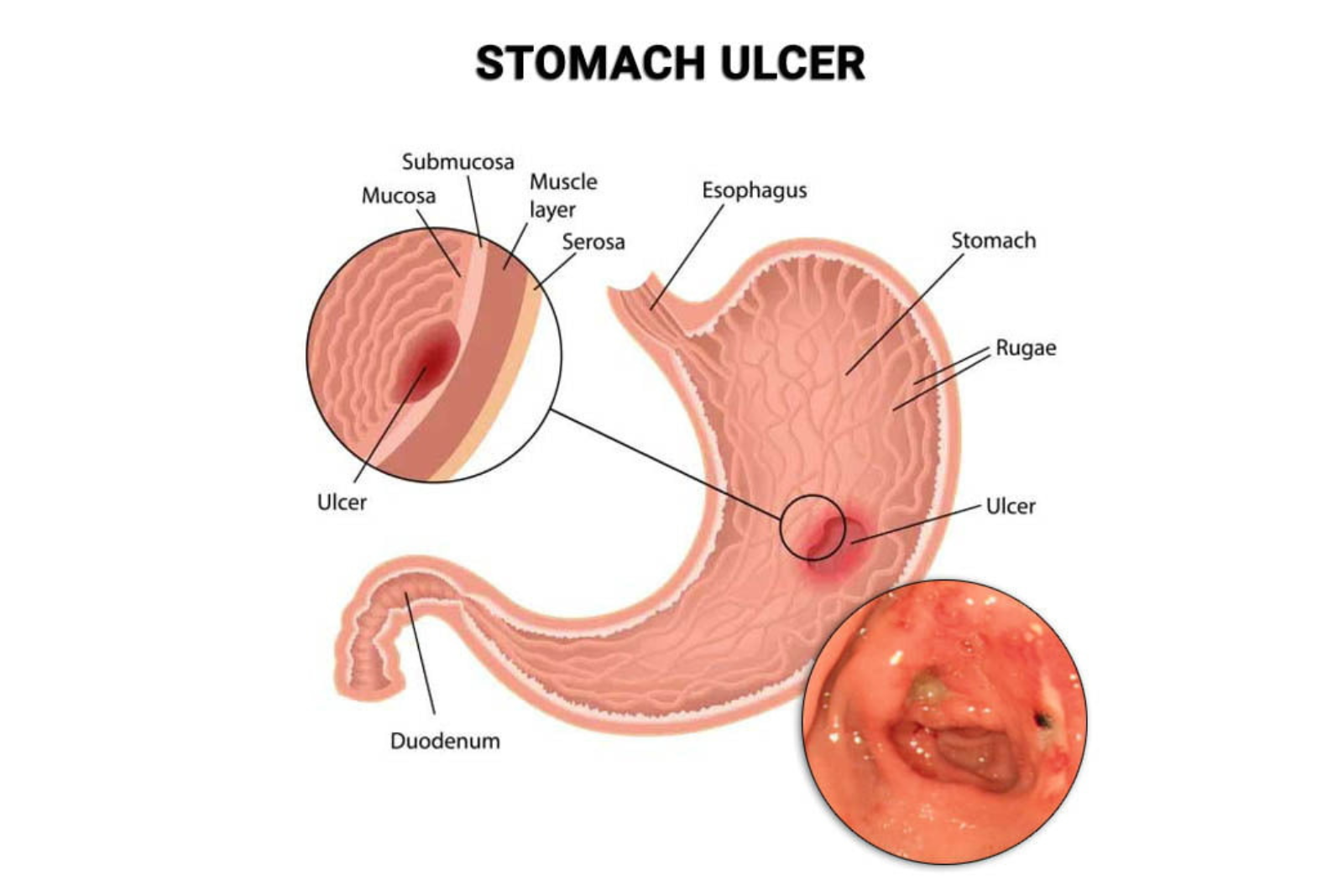
A stomach ulcer does not develop by accident — it is the result of a specific disruption to the stomach's natural protective mechanisms. Understanding what causes stomach ulcers is the key to treating them effectively and preventing recurrence.
At KIMS Advanced Gastroenterology & Endoscopy — KAGE — KAGE, KIMS Hospitals, Secunderabad, Secunderabad, Dr. Sreekanth Appasani and our team identify and address the root cause of every peptic ulcer — not just suppress its symptoms.
8 Common Causes and Triggers of Stomach Ulcers
1. H. pylori Bacterial Infection
Helicobacter pylori is responsible for approximately 70–80% of gastric ulcers and 90–95% of duodenal ulcers in India. This spiral-shaped bacterium burrows into the stomach lining, disrupting its protective mucus layer and triggering chronic inflammation that erodes tissue down to the ulcer stage. H. pylori spreads through contaminated water, food, and oral-oral contact — extremely common in India's densely populated cities including Hyderabad. Testing and eradication of H. pylori is the cornerstone of ulcer treatment at KAGE.
2. Regular NSAID and Aspirin Use
Non-steroidal anti-inflammatory drugs — ibuprofen, diclofenac, naproxen, aspirin, and ketorolac — are among the most commonly used medications in India and are the second most common cause of peptic ulcers. NSAIDs inhibit prostaglandin synthesis, removing the protective prostaglandins that maintain the stomach's mucus barrier and blood flow. Even short-term NSAID use can cause gastric erosions; chronic use without gastroprotection causes frank ulcers and serious GI bleeding.
3. Chronic Stress
While psychological stress does not directly create ulcers, it impairs the gut's protective mechanisms, increases acid secretion, reduces mucosal blood flow, and promotes behaviors (smoking, alcohol use, self-medicating with NSAIDs) that trigger ulcers. Stress ulcers also occur in critically ill patients — a well-recognized clinical entity at KIMS Hospitals.
4. Smoking
Smoking impairs the healing of existing ulcers, reduces stomach mucus production, increases acid secretion, and significantly increases the risk of ulcer complications including bleeding and perforation. Ulcer patients who smoke have dramatically higher recurrence rates.
5. Excessive Alcohol Consumption
Alcohol directly erodes the gastric mucosa, increases gastric acid production, impairs mucosal healing, and worsens H. pylori-related gastric injury. Heavy drinkers have significantly higher ulcer incidence and complication rates.
6. Zollinger-Ellison Syndrome (Gastrinoma)
A rare but important cause — a gastrin-secreting tumor (gastrinoma) causes massive acid hypersecretion, producing multiple, unusually located, treatment-resistant ulcers. Suspected when ulcers are multiple, recurrent after standard treatment, or associated with diarrhea. Investigated with serum gastrin measurement and EUS at KAGE.
7. Genetic Predisposition
A positive family history of peptic ulcer disease increases an individual's risk — partly through familial H. pylori transmission and partly through genetic differences in acid secretory capacity and mucosal defense.
8. Corticosteroids Combined With NSAIDs
Corticosteroids alone have minimal ulcer risk but dramatically amplify the ulcerogenic risk of NSAIDs when taken together — a combination common in patients with rheumatological conditions in India. Gastroprotection with a PPI is mandatory for patients taking this combination.
Conclusion
Stomach ulcer? Get to the root cause at KAGE, KIMS Hospitals, Secunderabad. Call: +91-7288842255
Frequently Asked Questions
No — while H. pylori causes the majority of ulcers, NSAIDs and aspirin are the second most common cause and are particularly important in India's self-medication culture. Other causes include Zollinger-Ellison syndrome, smoking, and alcohol. Some ulcers are idiopathic. Endoscopy at KAGE identifies the ulcer and H. pylori testing confirms or excludes it.
Psychological stress alone does not typically cause a classic peptic ulcer — it requires a structural insult (H. pylori, NSAIDs) to breach the mucosal barrier. However, 'stress ulcers' do occur in critically ill patients as a result of physiological (not psychological) stress. Psychological stress worsens existing ulcer disease and impairs healing.
Low-dose aspirin for cardiovascular prevention does increase ulcer risk — particularly in the elderly and those with H. pylori infection. If you are on aspirin, ask your doctor about co-prescribing a PPI for gastroprotection. Never stop aspirin without medical advice — the cardiovascular benefit usually outweighs the GI risk with appropriate PPI co-prescription.
Ulcers recur if the underlying cause is not fully addressed. H. pylori eradication — confirmed by post-treatment testing at KAGE — provides durable ulcer healing with very low recurrence rates. NSAID-related ulcers recur if NSAIDs are continued without PPI protection.
H. pylori is tested at KAGE by: rapid urease test during endoscopy, urea breath test (UBT), or stool antigen test. Treatment is 10–14 days of triple or quadruple antibiotic therapy with a PPI — achieving >90% eradication. Post-treatment breath test confirms successful eradication. Address: C/O Gastroenterology Dept, KIMS Hospitals, 1-8-31/1, Minister Road, Secunderabad, Hyderabad – 500003. Call +91-7288842255.